
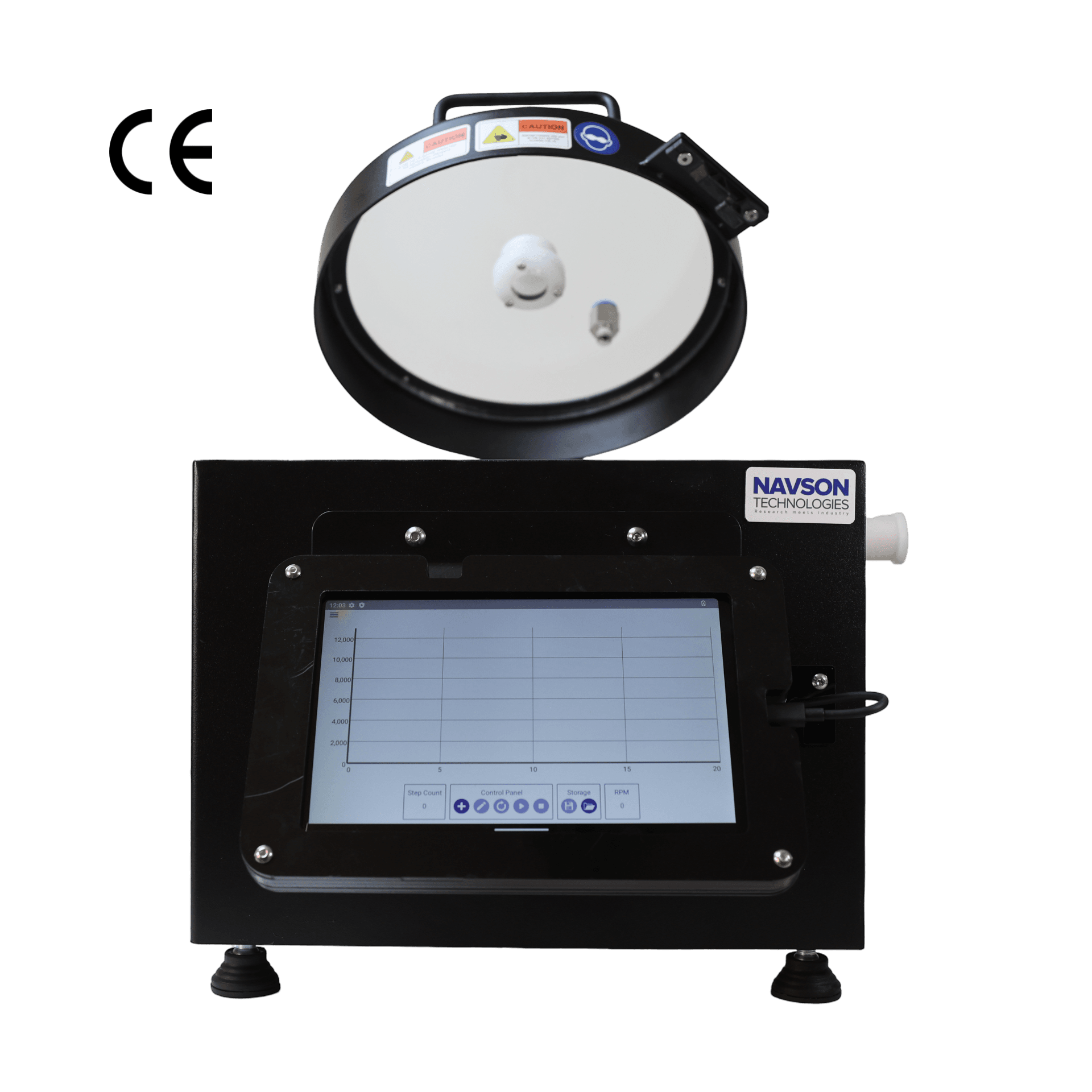
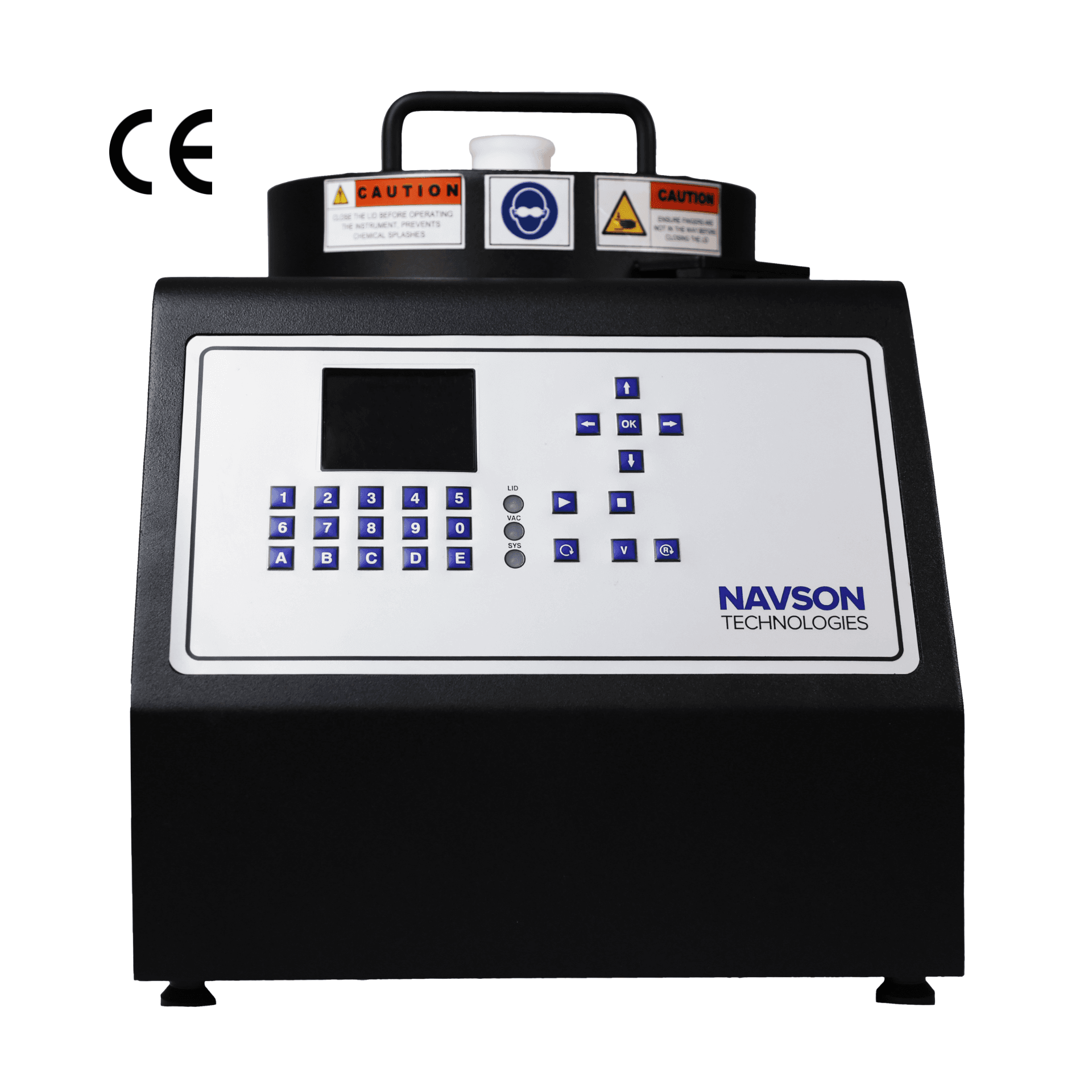
NT12000 Series Spin Coaters for Advanced Thin-Film Research
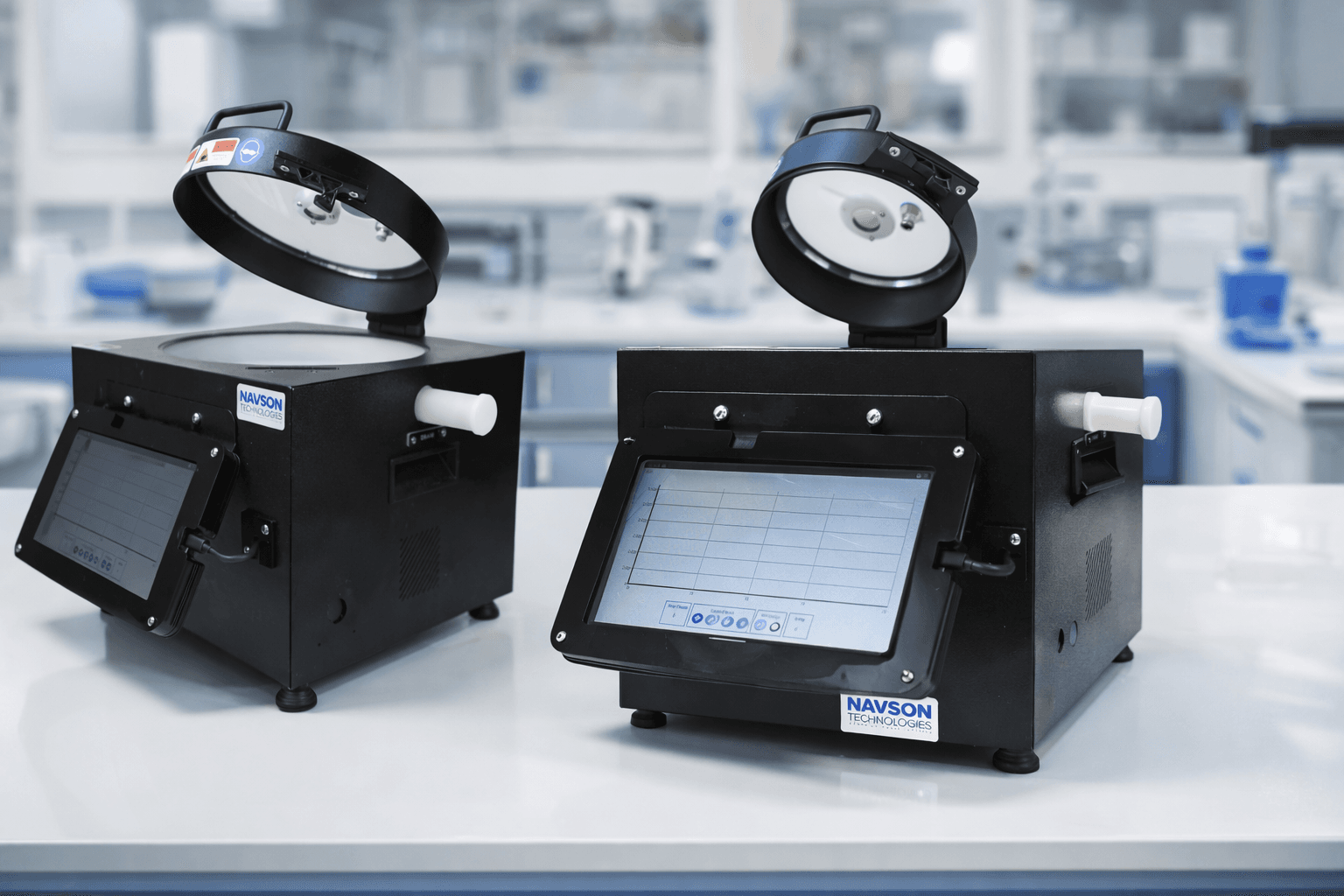
The NT12000 Series is Navson Technologies’ flagship family of research-grade spin coaters for precision thin-film deposition. Designed for solution-processed coating applications, the platform combines programmable process control, configurable substrate handling, contamination-conscious engineering, and expandable accessories to support research in photoresist lithography, perovskite photovoltaics, OLEDs, polymer science, nanomaterials, MEMS, biosensors, microfluidics, and other advanced thin-film applications across academic, government, and industrial R&D laboratories.
Unlike spin coaters developed for a single application or substrate format, the NT12000 Series is built as a unified product family. Researchers can select the model that best matches their substrate requirements while maintaining a consistent operating experience, enabling laboratories to standardize spin coating processes across different projects and users.
Today, the NT12000 Series Spin Coaters support research in applications including photoresist lithography, perovskite solar cells, OLEDs, polymer thin films, MEMS, biosensors, microfluidics, and nanomaterial coatings. With a growing body of peer-reviewed scientific publications referencing Navson instrumentation, the platform has become a trusted choice for researchers seeking consistent and reproducible thin-film deposition.
Whether you are establishing a new research laboratory, upgrading existing equipment, or comparing research-grade spin coaters, the NT12000 Series provides a flexible foundation for advanced thin-film research.
Compare Models: NT12000 (6”) · NT12000 (10”)
Key Takeaways
- Research-grade spin coating platform designed for advanced thin-film deposition.
- Available in multiple configurations to support substrates from small research samples to larger-format experimental work.
- Modular architecture with configurable vacuum, vacuum-less, and hybrid substrate handling.
- Supports applications including photoresist lithography, perovskite solar cells, OLEDs, polymers, nanomaterials, MEMS, biosensors, and functional coatings.
- Digital recipe management with expandable accessories for evolving research workflows.
- Used in published scientific research across multiple materials science and engineering disciplines.
What is the NT12000 Series?
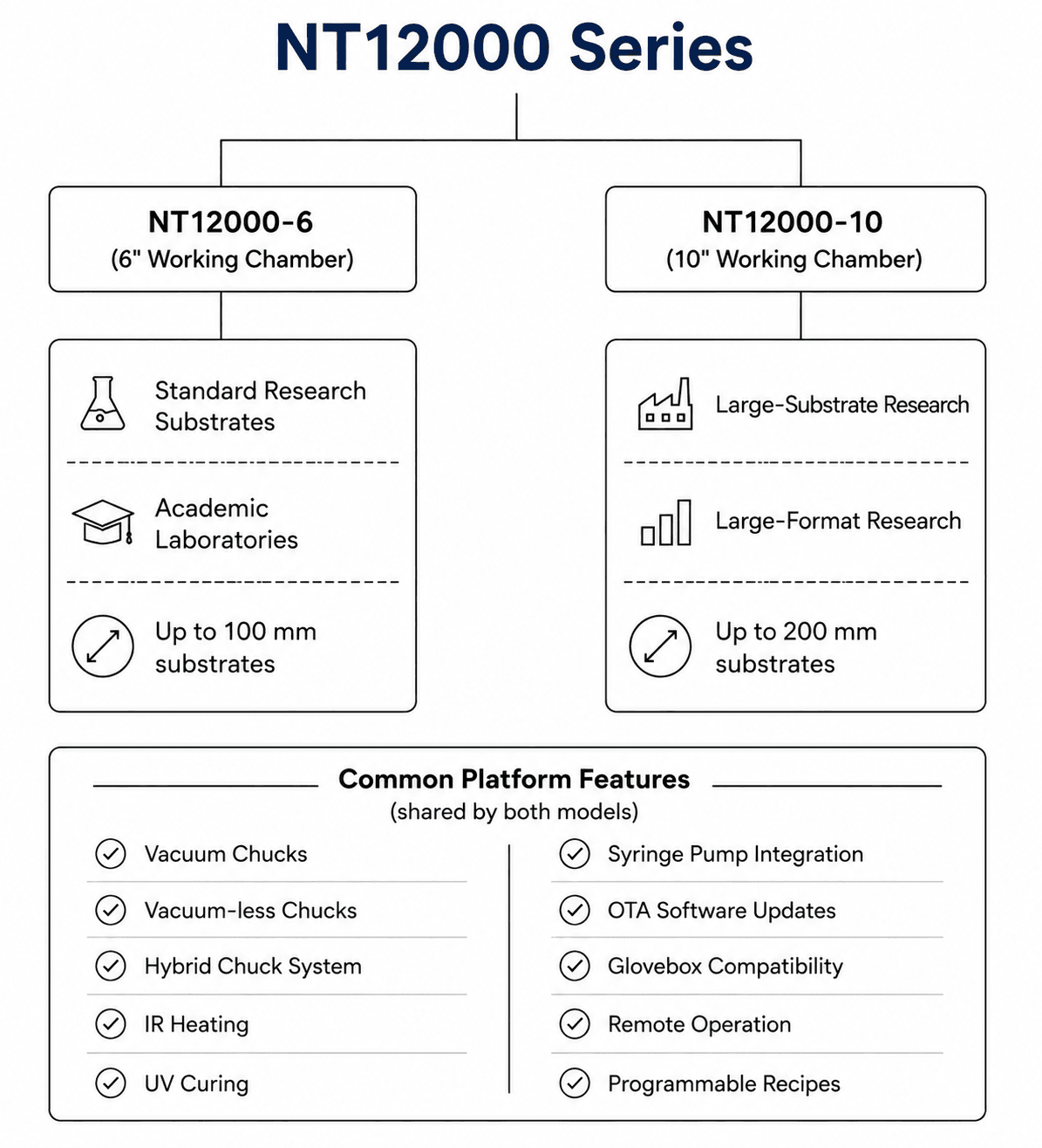
The NT12000 Series is Navson Technologies’ flagship spin coating platform for research laboratories requiring precise and reproducible thin-film deposition. Rather than representing a single instrument, it is a unified product family built on a common engineering architecture, allowing laboratories to choose the configuration that best matches their substrate requirements while maintaining a consistent operating experience.
Designed for research laboratories where flexibility and consistency are equally important, the NT12000 Series supports experimental work in materials science, semiconductor fabrication, nanotechnology, renewable energy, biotechnology, and advanced manufacturing.
A Product Family Built Around Research
Research laboratories rarely perform a single experiment or work with one material system. As projects evolve, researchers often need to process different substrates, investigate new coating chemistries, or develop entirely new fabrication workflows.
The NT12000 Series addresses this reality through a unified product family that provides a consistent operating experience across multiple system configurations. Whether researchers are working with standard laboratory substrates or larger experimental samples, they can select the most appropriate model while benefiting from the same software interface, process logic, and engineering approach.
This product-family architecture simplifies laboratory training, improves workflow consistency, and supports collaborative research across multiple users and projects.
Engineered for Research Environments
Unlike production equipment designed for high-volume manufacturing, research instrumentation must balance precision with flexibility. Experimental workflows frequently change as new hypotheses are tested, process parameters are refined, and novel materials are introduced.
The NT12000 Series is developed specifically for these research environments, where repeatable process control, configurable substrate handling, and adaptable system configurations are essential. This makes the platform suitable for exploratory research, process development, proof-of-concept studies, and interdisciplinary scientific investigations.
Designed for Diverse Thin-Film Applications
Spin coating remains one of the most widely used techniques for producing uniform thin films in research laboratories because it combines process simplicity with excellent control over film formation.
The NT12000 Series supports this broad range of applications by enabling researchers to develop, optimize, and reproduce coating processes across multiple scientific disciplines. Typical application areas include:
- Photoresist coating for photolithography
- Perovskite solar cell fabrication
- OLED and organic electronics research
- Polymer thin films
- Nanomaterial coatings
- MEMS and microfabrication
- Biosensors
- Microfluidic devices
- Functional and protective coatings
Each application presents unique process requirements, making configurable system selection an important consideration for research laboratories.
A Foundation for the NT12000 Product Family
The NT12000 Series serves as the central platform for Navson’s research spin coaters. Individual models are designed to address different substrate capacities while maintaining a common operating philosophy.
Researchers can compare available configurations to determine the model best suited to their laboratory requirements:
| Model | Typical Use Case |
|---|---|
| NT12000 (6″) | Research involving substrates up to 100 mm and standard laboratory thin-film applications |
| NT12000 (10″) | Research requiring substrates up to 200 mm or larger experimental formats |
Both models share the same product architecture, allowing laboratories to select the appropriate configuration without compromising workflow consistency.
Research Insight
Scientific research rarely follows a fixed path. Equipment that supports multiple applications, evolving experimental methods, and different substrate formats provides laboratories with greater flexibility throughout the lifecycle of a research programme. The NT12000 Series is designed around this principle, combining a unified product family with configurable capabilities to support diverse thin-film research.
Key Capabilities of the NT12000 Series
Every NT12000 Series model shares the same core engineering architecture and software platform. Rather than focusing on individual specifications, the capabilities below highlight how the platform supports reliable, efficient, and adaptable thin-film research.
Precision Process Control
Reliable thin-film research begins with consistent process control. The NT12000 Series enables researchers to create programmable spin coating recipes with controlled speed, acceleration, and processing time, helping laboratories minimise process variability and improve experimental repeatability.
The integrated software interface provides intuitive recipe management and real-time process monitoring, allowing researchers to standardise coating procedures across different users, projects, and laboratory environments.
Flexible Substrate Handling
Research rarely follows a standard substrate format. Different projects often involve wafers, glass slides, silicon, polymers, ceramics, or custom sample geometries.
The NT12000 Series supports multiple substrate holding methods, including vacuum, vacuum-less, and hybrid configurations, together with configurable substrate holders that accommodate a wide variety of research requirements. This flexibility enables laboratories to work across different materials without fundamentally changing their operating workflow.
High-Speed Thin-Film Deposition
The NT12000 Series supports controlled spin coating across a broad operating range suitable for solution-processed thin films used in modern research laboratories.
Researchers can optimise coating parameters for applications requiring thin, uniform, and reproducible films while maintaining precise control over process conditions throughout the spin cycle.
Rather than focusing solely on maximum RPM, the platform is engineered to provide stable and repeatable process performance across the entire operating range.
Digital Workflow Management
Modern research increasingly depends on digital documentation and process traceability.
The NT12000 Series incorporates a touchscreen software interface with programmable recipes, live process monitoring, and digital data management to help researchers document coating parameters, reproduce experiments, and streamline laboratory workflows.
These capabilities contribute to improved reproducibility while reducing the manual effort required to manage experimental procedures.
Laboratory Integration
Research equipment must integrate with existing laboratory infrastructure rather than operate in isolation.
The NT12000 Series is designed to support common research environments through features such as glove box compatibility, configurable substrate handling, optional process accessories, and software-driven workflow management. This enables laboratories to incorporate the system into a wide range of experimental setups without extensive process redesign.
Capability Overview
| Capability | Research Benefit |
|---|---|
| Programmable process control | Consistent and repeatable coating workflows |
| Flexible substrate handling | Supports diverse sample types and geometries |
| High-speed spin coating | Suitable for a broad range of thin-film processes |
| Digital recipe management | Improves documentation and reproducibility |
| Modular laboratory integration | Adapts to evolving research requirements |
Research Perspective
In research environments, the effectiveness of a spin coater is determined not by a single specification but by how consistently it enables researchers to develop, refine, and reproduce thin-film deposition processes. The NT12000 Series combines process control, flexibility, and digital workflow management to support this broader objective.
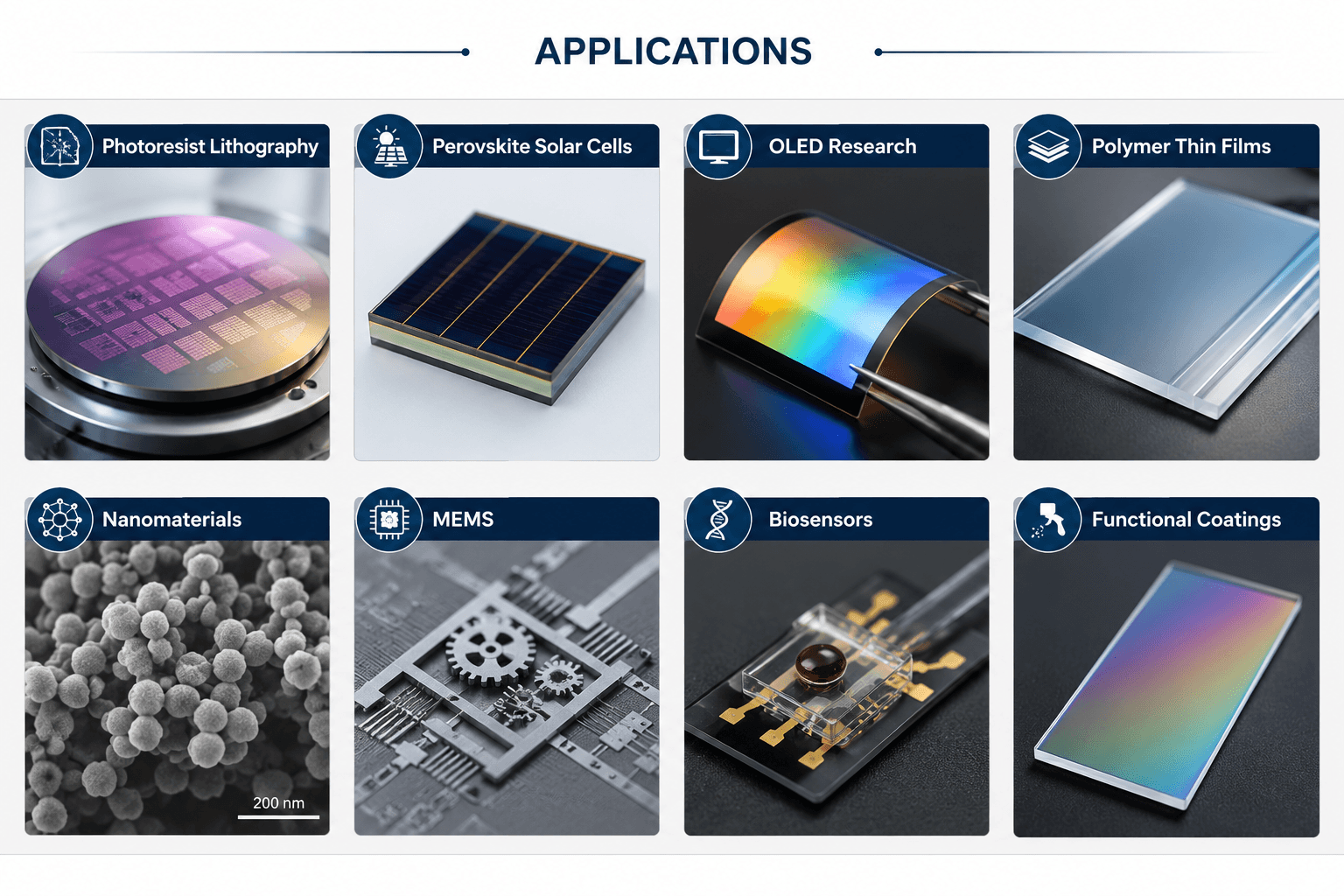
Research Applications of the NT12000 Series
Spin coating is used across numerous scientific disciplines wherever uniform thin films are required. The NT12000 Series supports solution-processed coating methods for materials research, semiconductor fabrication, renewable energy, biotechnology, and advanced manufacturing.
Photoresist Coating and Photolithography
Spin coating plays a critical role in photolithography by producing uniform photoresist layers required for accurate pattern transfer during microfabrication.
The NT12000 Series enables researchers to develop repeatable photoresist coating processes for semiconductor devices, MEMS fabrication, microelectronics, and cleanroom research where coating consistency directly influences downstream process quality.
Typical research areas include:
- Semiconductor device fabrication
- MEMS and NEMS
- Microelectronics
- Microfabrication research
- Cleanroom process development
Perovskite Solar Cell Research
Solution-processed perovskite materials have become one of the fastest-growing areas of photovoltaic research. Spin coating is widely used to deposit absorber layers, transport layers, and interface materials during laboratory-scale device fabrication.
The NT12000 Series supports researchers investigating coating uniformity, process optimization, and material development for high-efficiency perovskite solar cells.
Typical research areas include:
- Perovskite absorber layers
- Electron transport layers
- Hole transport layers
- Tandem solar cells
- Thin-film photovoltaics
OLED and Organic Electronics
Organic electronic devices require carefully controlled thin-film deposition to achieve consistent optical and electrical performance.
The NT12000 Series supports research involving OLED materials, conductive polymers, organic semiconductors, quantum dots, and flexible electronic devices where solution processing forms an essential part of device fabrication.
Typical research areas include:
- OLED displays
- Organic semiconductors
- Quantum dot devices
- Flexible electronics
- Printed electronics
Polymer and Functional Thin Films
Researchers working with polymers often require uniform coatings for mechanical, optical, electrical, or chemical functionality.
The NT12000 Series supports deposition of polymer solutions for investigations involving smart materials, protective coatings, responsive surfaces, and advanced functional films.
Typical research areas include:
- Conductive polymers
- Smart coatings
- Functional polymer films
- Protective surface coatings
- Responsive materials
Nanotechnology and Advanced Materials
Spin coating remains an important technique for depositing nanomaterials, nanoparticles, graphene dispersions, and other advanced materials onto research substrates.
The NT12000 Series enables researchers to evaluate coating behaviour, optimize deposition parameters, and investigate new material systems for electronic, optical, and structural applications.
Typical research areas include:
- Graphene research
- Nanocomposite coatings
- Carbon nanomaterials
- Functional nanostructures
- Advanced materials engineering
MEMS, Biosensors and Microfluidics
Miniaturized devices often depend on highly uniform thin films during fabrication.
The NT12000 Series supports research involving biosensors, lab-on-chip devices, microfluidic systems, biomedical coatings, and MEMS fabrication where repeatable coating processes contribute to device performance and experimental consistency.
Typical research areas include:
- Biosensor development
- Lab-on-chip devices
- Biomedical coatings
- Microfluidic platforms
- MEMS fabrication
Research Applications at a Glance
| Research Area | Typical Thin-Film Applications |
|---|---|
| Semiconductor Research | Photoresist coating, lithography, dielectric films |
| Renewable Energy | Perovskite photovoltaics, transport layers |
| Organic Electronics | OLEDs, conductive polymers, quantum dots |
| Materials Science | Functional coatings, advanced materials |
| Nanotechnology | Graphene, nanoparticles, nanocomposites |
| Biomedical Engineering | Biosensors, biofunctional coatings |
| MEMS & Microsystems | Lithography, microfabrication |
| Microfluidics | Lab-on-chip and diagnostic devices |
Research Perspective
Spin coating continues to be one of the most versatile thin-film deposition techniques because the same platform can support fundamentally different research disciplines—from semiconductor lithography and renewable energy to nanotechnology and biomedical engineering. The NT12000 Series is designed to provide researchers with the flexibility required across these evolving scientific fields.
Accessories
Compare NT12000 Series Models
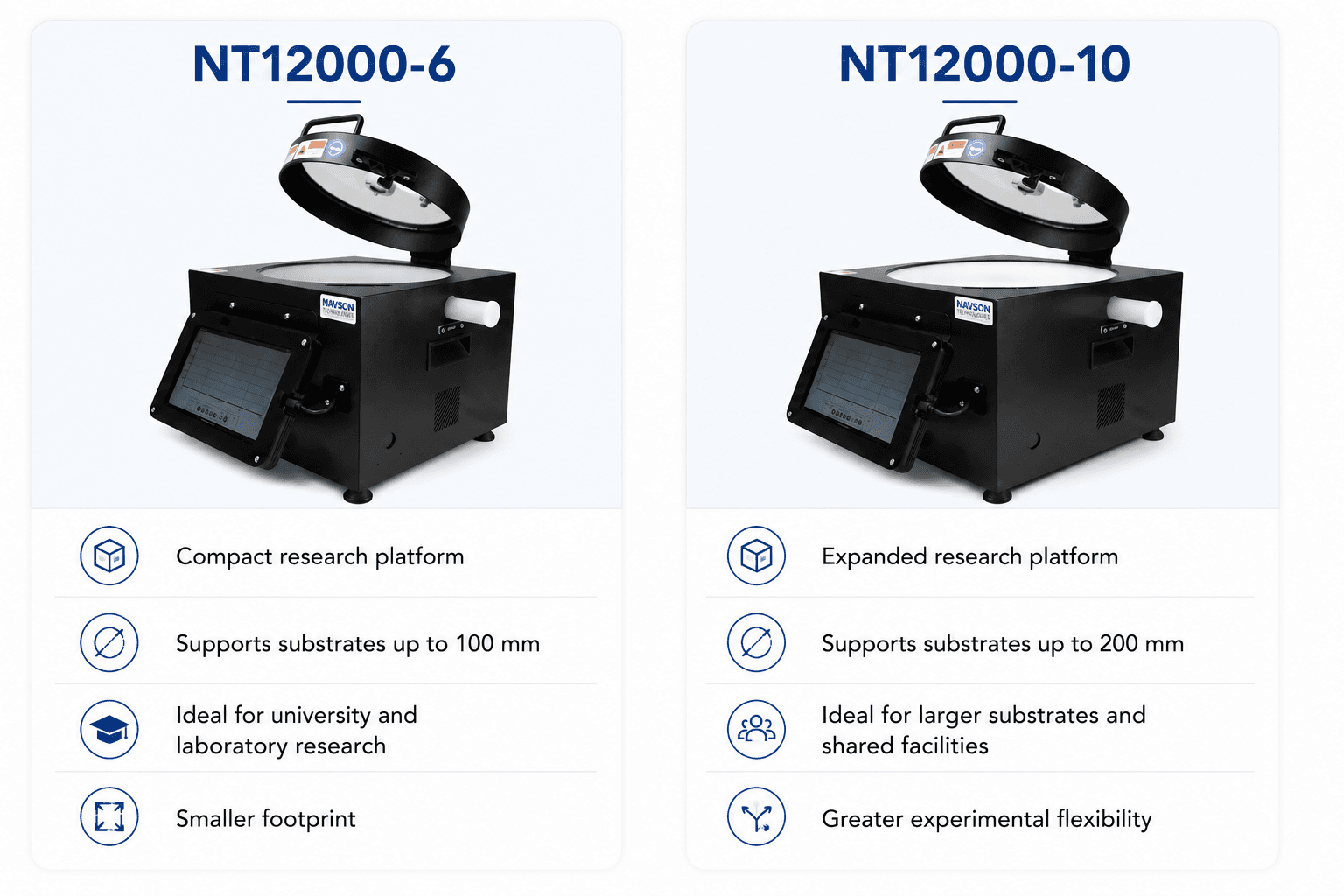
Both NT12000 models share the same software environment, operating logic, and engineering philosophy. The primary difference is substrate capacity, allowing laboratories to choose the configuration that best matches their current and future research requirements.
Which NT12000 Model Is Right for Your Laboratory?
Choose the NT12000 (6″) if your research primarily involves standard laboratory substrates up to 100 mm (4 inches). Its compact footprint makes it well suited for university laboratories, departmental research facilities, and projects where bench space is limited.
Choose the NT12000 (10″) if your work involves substrates up to 200 mm (8 inches) or if your laboratory anticipates expanding into larger-format thin-film research. The larger working chamber provides additional flexibility while maintaining the same operating experience and software environment as the NT12000 (6″).
Model Comparison
| Feature | NT12000 (6″) | NT12000 (10″) |
|---|---|---|
| Recommended substrate size | Up to 100 mm (4″) | Up to 200 mm (8″) |
| Working chamber | 6-inch polypropylene chamber | 10-inch polypropylene chamber |
| Typical users | Universities, research labs, pilot R&D | Advanced research labs, larger substrates, multidisciplinary facilities |
| Research applications | Photoresist, OLED, polymers, MEMS, nanomaterials | All NT12000 (6″) applications plus larger substrate research |
| Software platform | Common NT12000 interface | Common NT12000 interface |
| Process programming | Programmable recipes | Programmable recipes |
| Compatible accessories | Shared accessory ecosystem | Shared accessory ecosystem |
Common Features Across the NT12000 Series
Regardless of the selected model, every NT12000 Series spin coater is built on the same research platform and includes:
- Programmable spin coating recipes
- Precision speed and acceleration control
- Touchscreen user interface
- Digital process monitoring
- USB data export
- Vacuum, vacuum-less, and hybrid substrate handling
- Natural polypropylene working chamber
- Chemical-resistant construction
- Glove box compatibility
- Expandable accessory ecosystem
This common platform ensures that researchers moving between models experience the same operating logic, software environment, and process workflow.
Planning for Future Research
Selecting a spin coater is often a long-term investment. While current substrate size is an important consideration, laboratories should also consider future research directions, collaborative projects, and anticipated equipment sharing across research groups.
Choosing the appropriate NT12000 model today can reduce the need for future equipment replacement as research programmes evolve.
For laboratories expecting to work with larger substrates or more diverse applications, the NT12000 (10″) provides greater flexibility. Laboratories focused on standard research substrates may find the NT12000 (6″) offers the ideal balance of capability and footprint.
Decision Guide
| If your laboratory needs… | Recommended Model |
|---|---|
| Standard research substrates up to 100 mm | NT12000 (6″) |
| Larger substrates up to 200 mm | NT12000 (10″) |
| Compact laboratory footprint | NT12000 (6″) |
| Maximum flexibility for future research | NT12000 (10″) |
| Shared departmental laboratory | Either model, depending on substrate requirements |
Need More Technical Details?
Each NT12000 model has its own dedicated product page with complete technical specifications, accessories, dimensional drawings, and downloadable documentation.
Explore the individual models to compare substrate compatibility, chamber dimensions, available accessories, and optional configurations in greater detail.
Expandability and Accessories
The NT12000 Series is designed as an expandable research platform. Compatible accessories and configurable hardware allow laboratories to adapt the system for new materials, substrate formats, and experimental methods without replacing the core instrument.
Configure the Platform for Your Research
The NT12000 Series supports multiple hardware configurations, allowing researchers to adapt the system to different substrates, coating processes, and laboratory environments.
Available configuration options include:
- Vacuum substrate chucks
- Vacuum-less substrate chucks
- Hybrid substrate holding systems
- Custom substrate holders
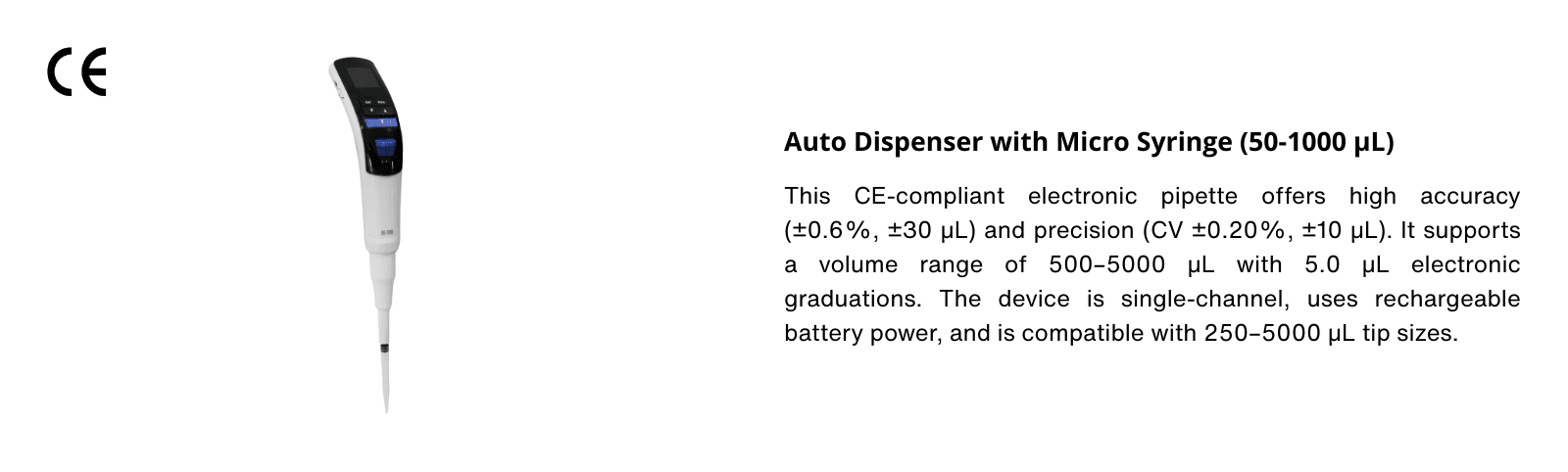
- Automatic syringe dispensing systems
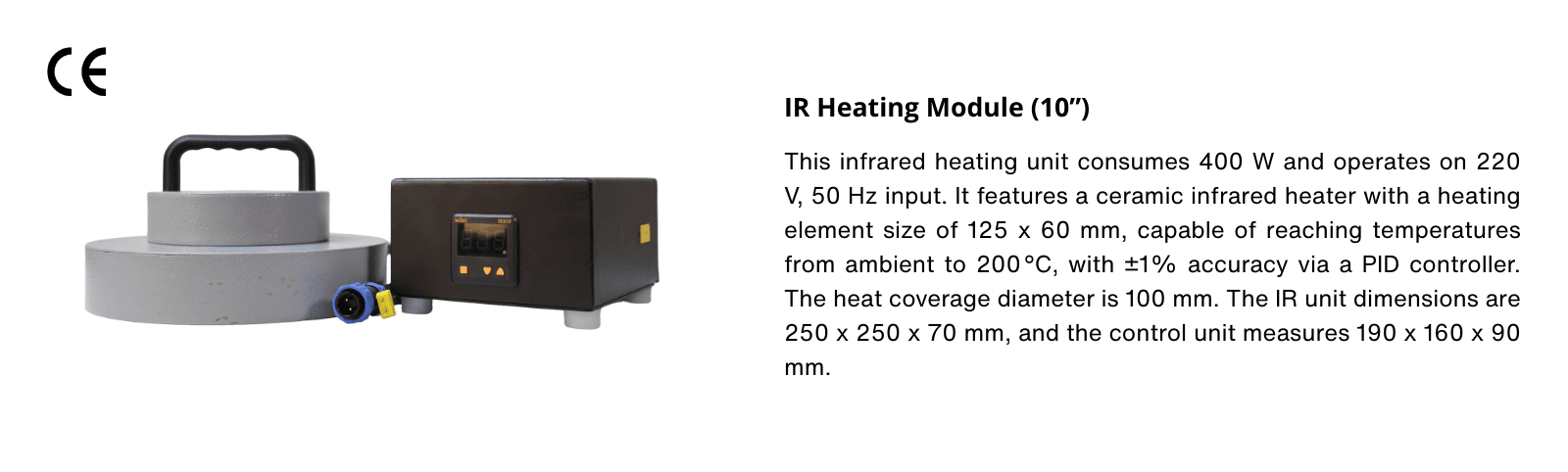
- Infrared (IR) heating module
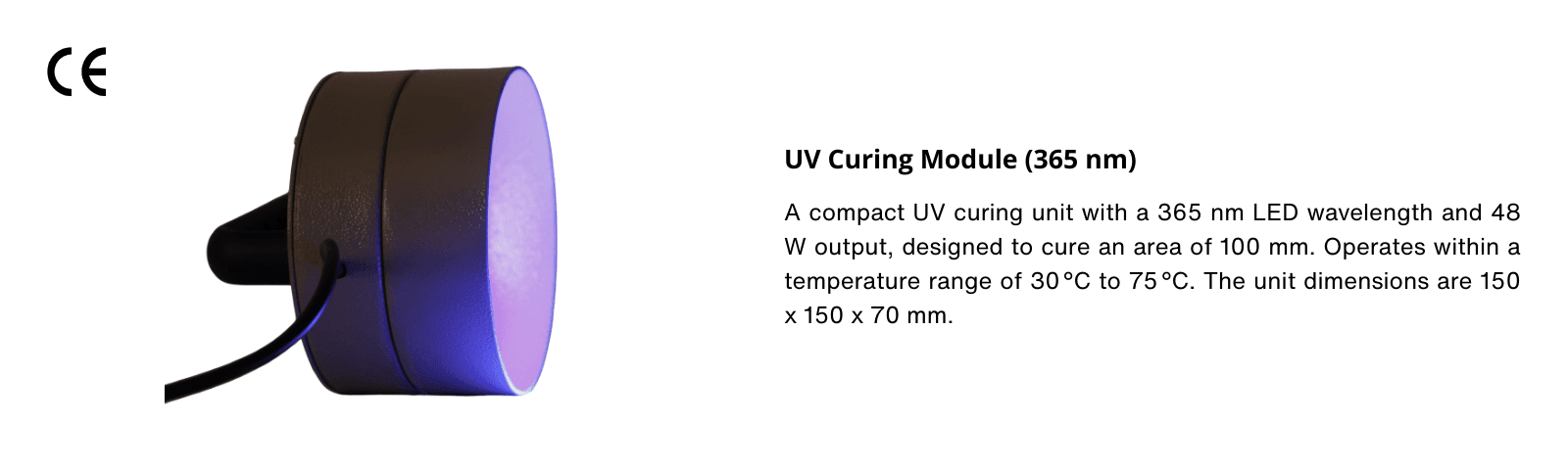
- UV curing module
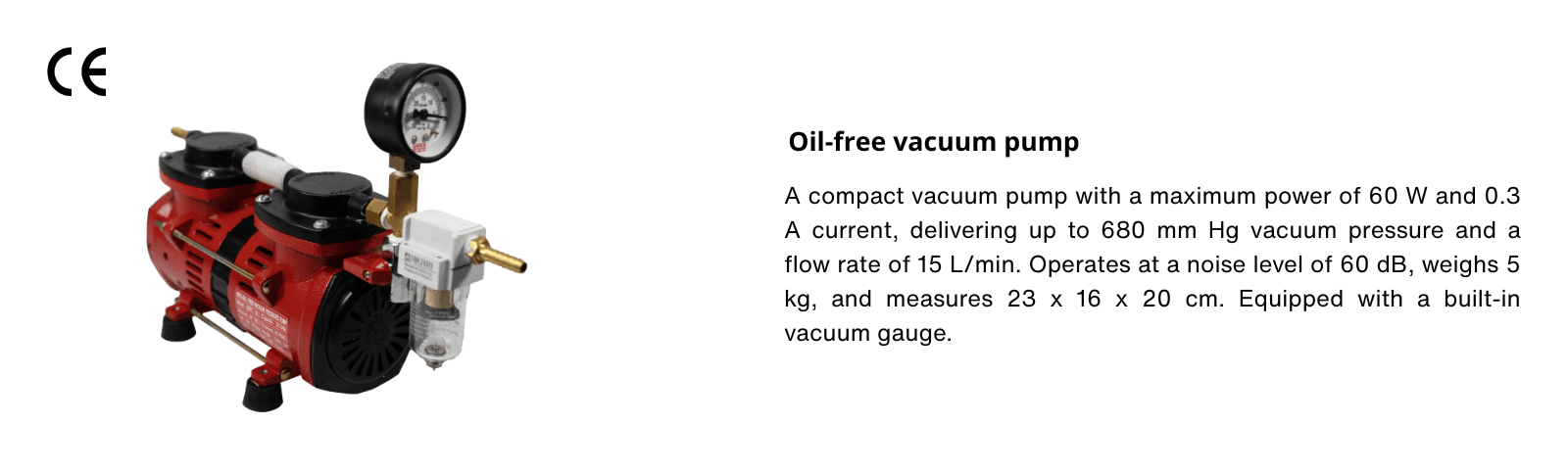
- Oil-free vacuum pump
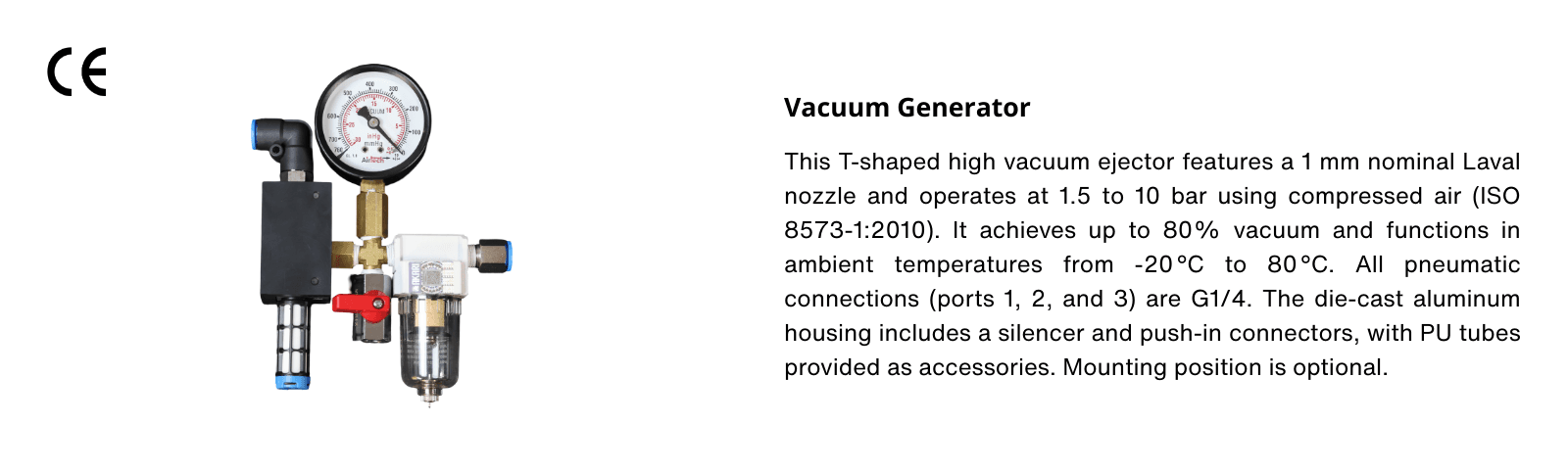
- Vacuum generator
- PC connectivity software
- Waste collection containers
Researchers can select only the accessories required for their workflow, reducing unnecessary complexity while maintaining the flexibility to expand later.
Compatible with Diverse Research Workflows
Different research disciplines often require different processing methods, substrate geometries, and post-coating treatments.
The NT12000 Series can be configured to support workflows involving:
- Thin-film deposition
- Photoresist processing
- Polymer coating
- Perovskite device fabrication
- Nanomaterial deposition
- Functional surface engineering
- Biosensor development
- Microfluidic device fabrication
This flexibility allows one platform to support multiple research programmes within the same laboratory.
Expand Without Replacing Your Equipment
This approach offers several practical advantages:
- Supports evolving research objectives
- Simplifies equipment standardization across laboratories
- Reduces retraining for new workflows
- Improves long-term utilization of laboratory infrastructure
- Helps maximize the value of capital equipment investments
For shared research facilities and multidisciplinary laboratories, this adaptability can simplify equipment planning while supporting a broader range of scientific investigations.
Accessory Overview
| Accessory | Typical Purpose |
|---|---|
| Vacuum Chucks | Secure substrate holding during spin coating |
| Vacuum-Less Chucks | Processing substrates unsuitable for vacuum holding |
| Hybrid Chucks | Flexible substrate handling |
| Custom Holders | Non-standard substrate geometries |
| Automatic Syringe Dispenser | Controlled solution dispensing |
| IR Heating Module | Accelerated drying and thermal processing |
| UV Curing Module | UV-assisted coating processes |
| Oil-Free Vacuum Pump | Laboratory vacuum generation |
| PC Connectivity Software | Process monitoring and data management |
| Waste Collection Containers | Cleaner laboratory operation |
Research Perspective
Scientific equipment delivers greater long-term value when it adapts to changing research needs. By supporting configurable hardware and application-specific accessories, the NT12000 Series enables laboratories to extend system capabilities while maintaining a consistent research workflow.
Research Validation and Scientific Publications
Independent scientific publications provide one of the strongest indicators of laboratory equipment credibility. The NT12000 Series has supported peer-reviewed studies across multiple disciplines, demonstrating its use in real experimental workflows involving advanced thin-film deposition.
Supporting Published Scientific Research
The NT12000 Series has contributed to research published in internationally recognized scientific journals covering a broad range of disciplines, including:
- Materials Science and Engineering
- Semiconductor Research
- Nanotechnology
- Renewable Energy
- Polymer Science
- Surface Engineering
- Microelectronics
- MEMS and Microsystems
- Biomedical Engineering
These publications reflect the platform’s use in experimental workflows where process consistency and reproducibility are essential.
Research Areas Supported
Published work involving the NT12000 Series includes investigations into:
- Perovskite solar cells
- Photoresist lithography
- OLED materials
- Functional polymer films
- Nanomaterial coatings
- Graphene and advanced materials
- Thin-film sensors
- Surface modification
- Microfabrication processes
As new scientific fields continue to emerge, the platform remains applicable across a wide spectrum of solution-processed thin-film research.
Peer-Reviewed Publishing Ecosystem
Research using Navson instrumentation has appeared in publications from internationally recognized scientific publishers, including:
- American Chemical Society (ACS)
- Elsevier
- Springer Nature
- Wiley
- Taylor & Francis
- MDPI
Publication within these journals reflects independent scientific peer review of the underlying research and reinforces the credibility of the laboratories using the NT12000 Series in their experimental workflows.
Featured Research Examples
The NT12000 Series has supported peer-reviewed research across multiple scientific disciplines where reproducible thin-film preparation is critical. The examples below illustrate how researchers have used the platform in published experimental workflows.
A. Biomaterials and Bone Tissue Engineering
Liquid Crystalline Hydroxyapatite Nanorods Orchestrate Hierarchical Bone-Like Mineralization
Published in Small (University College London, UK)
Researchers developed aligned hydroxyapatite nanorods that mimic the hierarchical structure of natural bone to support stem cell growth and bone-like mineralization. The NT12000 Series was used to prepare uniform PDMS and hydroxyapatite coatings, enabling reproducible thin-film fabrication for biomaterials and regenerative medicine research.
B. Slippery Liquid-Infused Porous Surfaces (SLIPS)
Can Microcavitated Slippery Surfaces Outperform Micropillared and Untextured?
Published in Langmuir (ACS) (IIT Gandhinagar, India)
This research investigated advanced slippery liquid-infused porous surfaces designed for improved liquid repellency and durability. The NT12000 Series enabled controlled deposition of lubricant and thin-film layers, supporting repeatable fabrication and reliable surface characterization.
C. Corrosion-Resistant Functional Surfaces
Long-Term Durability and Corrosion Resistance of Hydrothermally Etched Slippery AA5083 Surfaces Under Brine Water
Published in Surfaces and Interfaces (IIT Gandhinagar, India)
Researchers evaluated lubricant-infused aluminium surfaces under prolonged brine exposure to study corrosion resistance and long-term durability. The NT12000 Series provided reproducible coating deposition, enabling consistent sample preparation for functional surface engineering research.
Why Published Research Matters When Choosing Laboratory Equipment
For research laboratories, published scientific literature provides a stronger indicator of real-world equipment use than promotional claims or marketing testimonials.
When instrumentation is repeatedly used in peer-reviewed studies, it demonstrates that researchers consider the platform suitable for producing experimental data intended for scientific publication.
For universities, government laboratories, and industrial R&D teams, this offers greater confidence that the equipment has already been integrated into demanding research environments.
Research Validation at a Glance
| Evidence | What It Indicates |
|---|---|
| Peer-reviewed publications | Independent use in scientific research |
| Multiple research disciplines | Versatility across thin-film applications |
| International scientific publishers | Adoption within globally recognized research communities |
| Academic and government laboratories | Suitability for advanced research environments |
| Diverse application areas | Broad capability across evolving scientific fields |
Research Perspective
The strongest validation for research equipment comes from the scientific community itself. Instruments that consistently appear in peer-reviewed publications have demonstrated their ability to support reproducible experimental work under real laboratory conditions. This body of published research provides an independent layer of confidence beyond product specifications alone.
Explore the Publications Library
Browse Navson’s growing collection of peer-reviewed research publications to see how the NT12000 Series has been applied across thin-film deposition, semiconductor research, renewable energy, nanotechnology, advanced materials, and related scientific disciplines.
Why Researchers Choose the NT12000 Series
Beyond technical specifications, laboratories evaluate instrumentation based on usability, reproducibility, adaptability, and long-term reliability. The NT12000 Series has been developed around these practical requirements.
Consistent Thin-Film Deposition
Reliable research begins with reproducible processes. The NT12000 Series provides stable process control that enables researchers to develop coating methods which can be repeated across experiments, operators, and research projects.
Consistent coating performance helps reduce experimental variability and supports greater confidence in research outcomes.
Designed for Everyday Laboratory Use
Scientific instruments should simplify research rather than increase operational complexity.
The NT12000 Series combines an intuitive touchscreen interface with programmable process recipes and straightforward workflow management, allowing new users to become productive quickly while enabling experienced researchers to efficiently develop and optimise coating processes.
This balance of simplicity and control makes the platform suitable for both individual laboratories and shared research facilities.
Flexible Enough for Evolving Research
Research priorities change over time. Laboratories may investigate new materials, collaborate across disciplines, or expand into different thin-film applications.
With configurable substrate handling and an expandable accessory ecosystem, the NT12000 Series enables laboratories to adapt existing equipment to changing research requirements without replacing the core system.
Built for Research Environments
Unlike production equipment designed for repetitive manufacturing, research instrumentation must accommodate frequent process development and experimental variation.
The NT12000 Series is engineered specifically for laboratory environments where researchers continually refine coating parameters, evaluate new materials, and develop novel fabrication methods.
This research-first approach supports exploratory science as well as long-term experimental programmes.
Supported by Scientific Evidence
One of the strongest indicators of laboratory equipment reliability is its continued use in published scientific research.
The NT12000 Series Spin Coaters has contributed to peer-reviewed research across materials science, nanotechnology, renewable energy, electronics, and related scientific disciplines, providing independent evidence of its application in demanding research environments.
For procurement teams and principal investigators, published research offers greater confidence than marketing claims alone.
Direct Technical Support
Research projects often require application-specific guidance beyond standard product documentation.
Navson provides technical assistance throughout the evaluation, installation, and operational stages, helping laboratories select appropriate configurations, integrate accessories, and establish effective spin coating workflows for their research objectives.
Why Laboratories Select the NT12000 Series
| Research Priority | How the NT12000 Series Supports It |
|---|---|
| Experimental reproducibility | Stable programmable process control |
| Multiple research applications | Flexible substrate handling and configurable platform |
| Long-term laboratory investment | Expandable accessory ecosystem |
| Research credibility | Used in peer-reviewed scientific publications |
| Ease of operation | Intuitive software and digital workflow management |
| Technical confidence | Application-focused engineering support |
Expert Perspective
Research laboratories rarely evaluate equipment based on a single specification. Decisions are typically influenced by a combination of reproducibility, adaptability, published research use, operational simplicity, and long-term laboratory value. The NT12000 Series Spin Coaters has been developed to address these broader requirements while supporting diverse thin-film research applications.
Continue Your Evaluation
Explore the complete technical specifications, compare available models, or discuss your laboratory’s coating requirements with our engineering team to identify the most suitable NT12000 Series Spin Coaters configuration.
→ Request a Technical Consultation
Frequently Asked Questions
The NT12000 Series Spin Coaters are designed for research-grade thin-film deposition using spin coating. Typical applications include photoresist coating, perovskite solar cells, OLED fabrication, polymer thin films, nanomaterials, MEMS, biosensors, and microfluidic devices.
Both models share the same software platform and operating principles. The primary difference is substrate capacity. The NT12000 (6″) supports substrates up to 100 mm (4 inches), while the NT12000 (10″) accommodates substrates up to 200 mm (8 inches).
The decision primarily depends on substrate size. Laboratories working with substrates up to 100 mm typically select the NT12000 (6″), while those requiring substrates up to 200 mm or planning future expansion generally choose the NT12000 (10″).
Yes. The NT12000 Series is suitable for research laboratories and cleanroom environments where controlled thin-film deposition and contamination-conscious workflows are required. Appropriate cleanroom practices should always be followed based on your facility’s classification.
Yes. The system is designed to support glove box integration, making it suitable for research involving moisture-sensitive or oxygen-sensitive materials.
Yes. Depending on the selected configuration, researchers can use vacuum, vacuum-less, or hybrid substrate holding systems to accommodate different sample types and experimental requirements.
Researchers use the NT12000 Series with photoresists, polymer solutions, nanoparticle suspensions, perovskite precursor solutions, conductive polymers, functional coatings, and many other solution-processable materials. Material compatibility should always be evaluated for individual research applications.
Yes. The NT12000 Series Spin Coaters support a range of compatible accessories including custom substrate holders, vacuum systems, automatic syringe dispensers, infrared heating, UV curing, and PC connectivity software, allowing laboratories to extend system capabilities as research needs evolve.
Yes. Navson provides technical support to assist laboratories with installation, system operation, and application-related questions throughout the product lifecycle.
Pricing depends on the selected model, accessories, and laboratory requirements. Contact Navson’s engineering team to receive a tailored quotation based on your intended applications and preferred system configuration.
Ready to Advance Your Thin-Film Research?
Explore the NT12000 Series Spin Coaters, compare available models, review published research, or speak with our engineering team to identify the configuration that best matches your thin-film deposition requirements.