
Spin Coater Price in India: What Determines Cost and Process Repeatability?
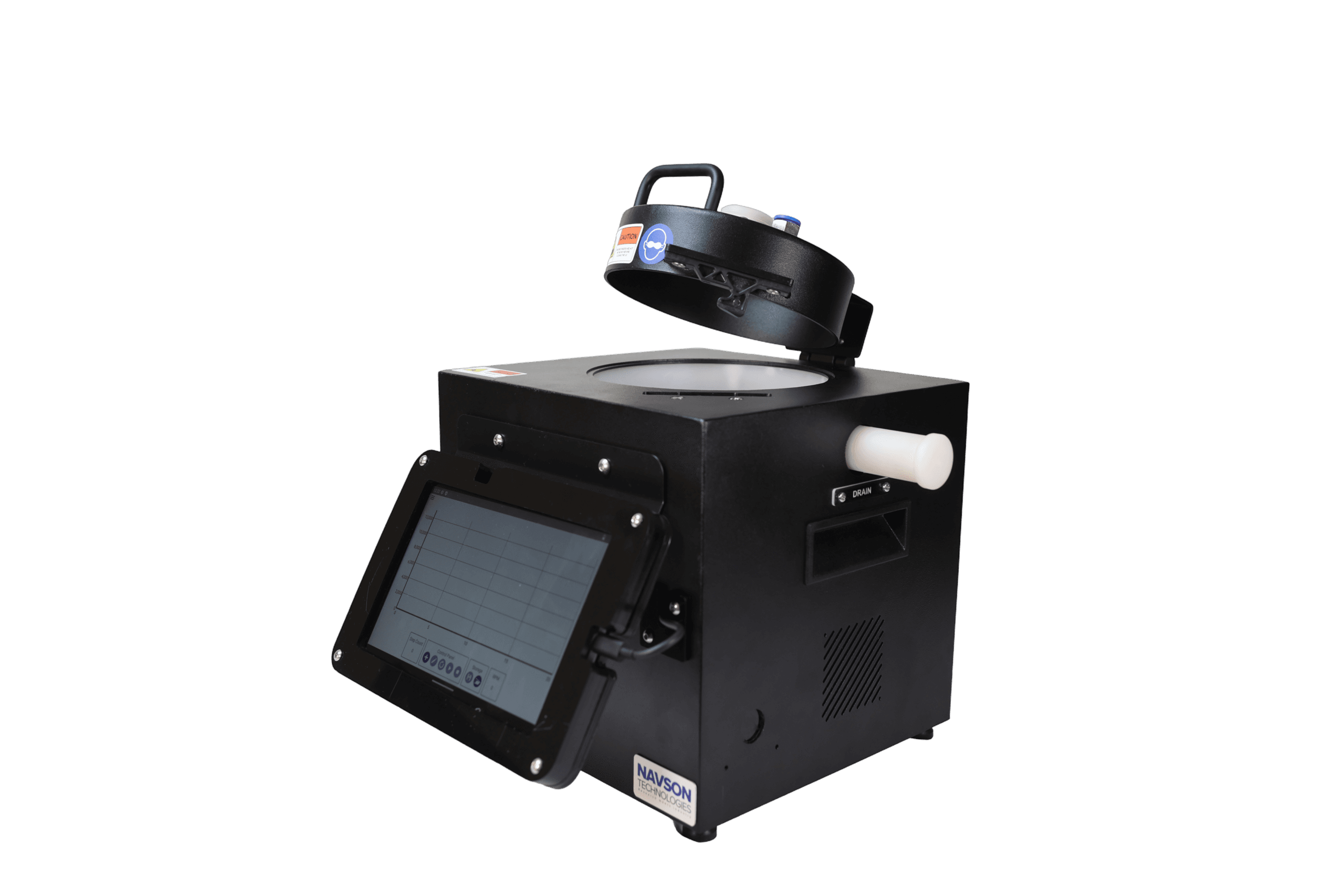
A spin coater’s price is not just a hardware cost; it is a process-reliability investment. Systems with ±1% RPM stability and programmable multi-step sequences—like the NT12000—eliminate the hidden costs of repeated failed experiments in thin-film R&D. In research environments, spin coater price in India spans entry-level systems to high-precision platforms used in semiconductor and advanced materials labs. In India, this translates broadly from ₹1.5 lakh to ₹25 lakh, depending on process control capability, RPM stability, and application sensitivity.
At the lower end, systems are often optimized to reach target RPM, rather than maintain closed-loop process stability under load. As process sensitivity increases—particularly below the micron scale—the requirement shifts from achieving RPM to maintaining stable, repeatable process conditions under dynamic load during film formation.
For a typical PMMA coating run, that appears straightforward at the parameter level: 3000 RPM, ~60 seconds, anisole-based solution, target thickness in the 200–500 nm range. The expectation is uniformity across the substrate and reproducibility across runs. In practice, the outcome diverges, either thickness varies radially, the edge bead becomes inconsistent, or a second run under identical settings produces a different result.
At that point, attention usually shifts to solution preparation or ambient conditions. In most cases, the source of variation is earlier in the chain—how the spin coater controls the process during the first few seconds of film formation. This is where evaluating spin coater price purely as a cost comparison breaks down. The variation in price reflects something more fundamental: whether the system can hold process variables within a repeatable window.
The practical question is not “What does a spin coater cost?” but “At what point does the system begin to produce repeatable results for your application?”
What Determines Spin Coater Price in India?
Spin coater prices in India is primarily determined by three control variables:
(1) RPM stability under load,
(2) ramp rate control during acceleration, and
(3) programmable multi-step process execution.
Systems that maintain ±1% RPM stability and controlled ramp profiles produce repeatable thin films, while systems without closed-loop control introduce thickness variation.
Where PMMA Coating Fails in Practice
In Indian research labs, for sub-micron PMMA films (<500 nm), three failure modes dominate.
- RPM instability under load. A system that nominally runs at 3000 RPM but drifts by even ±3–5% during solvent thinning introduces measurable thickness variation. Given the relationship between spin speed and film thickness, that level of drift typically translates into ~10–15% deviation.
- Uncontrolled acceleration (ramp rate). PMMA coating is not a single steady-state step. The transition from spread (low RPM) to thinning (high RPM) determines how solvent is expelled. If that transition varies, evaporation dynamics change, and the resulting film morphology shifts.
- Substrate handling. Vacuum-only chucks work reliably for rigid wafers, but flexible or partially compliant substrates introduce slippage or deformation at higher speeds. The effect appears as radial non-uniformity or localized thickness variation.
These are not edge cases, they are the dominant reasons why identical “recipes” fail to reproduce.
What Actually Determines Spin Coater Price in India
Spin coater price for research labs in India differs across the market—visible across supplier listings and procurement platforms—map directly to how well a system controls these variables. Four parameters account for most of that variation.
- RPM stability is the primary driver. Entry-level systems often operate in the ±3–5% range under load. Precision systems operate at ±1%. For PMMA films in the 200–500 nm range, that difference determines whether thickness stays within tolerance.
- Multi-step process control defines whether the coating sequence can be executed consistently. A typical PMMA process involves a low-speed spread phase, a controlled acceleration, and a steady thinning stage. Systems that cannot explicitly define these steps rely on implicit behavior, which varies between runs.
- Ramp rate control governs how quickly the system transitions between stages. This directly affects solvent evaporation during acceleration. Even if the final RPM is correct, an uncontrolled ramp produces different intermediate conditions.
- Chuck architecture determines substrate stability. Hybrid systems that support both vacuum and vacuum-less holding maintain alignment across a wider range of substrates, including flexible polymers and thin films on glass.
Chemical resistance is often treated as secondary, but over time it becomes a stability factor. PMMA solvents such as anisole degrade lower-grade chambers, introducing contamination and variability that only becomes visible after extended use.
The Hidden Cost of “Cheap”
| Feature | Entry-Level (₹1.5L – 3L) | Navson NT12000 (Precision) |
| RPM Stability | ±3–5% (Drifting) | ±1% (Locked) |
| Film Outcome | Variable Thickness | Sub-micron Repeatability |
| Long-term Cost | High (Wasted Precursors) | Low (First-time Success) |
Price vs Capability: The Practical Range
In the current market, across universities and R&D labs in India, PMMA spin coating machine prices range:
- Entry-level systems in the lower price range are typically optimized for basic coating tasks and may not maintain consistent process stability under load for high-sensitivity thin-film applications
- ₹3–6 lakh systems introduce partial programmability but often remain inconsistent under load
- ₹12–25 lakh imported research-grade systems deliver full process control with established global validation
- ₹5–8 lakh high-performance systems engineered for research environments can operate within similar process control thresholds, depending on configuration and application alignment
The distinction is not incremental, systems below a certain control threshold produce variable outcomes, and systems above it produce repeatable ones.
If your process requires sub-micron repeatability, request a configuration aligned to your material system.
Spin Coater Price by Application Sensitivity
Photoresist systems such as SU-8 are highly sensitive to ramp control. Small variations during acceleration alter solvent evaporation, which directly affects feature definition in lithography and MEMS processes.
Perovskite precursor solutions are dominated by solvent evaporation dynamics during early spin stages. Instability in RPM or ramp timing leads to non-uniform crystallization and reduced device efficiency.
Organic electronic layers (OLED, OPV) require uniformity across larger substrates. Minor radial variations translate into device-level inconsistencies in multilayer stacks.
Sol-gel coatings introduce viscosity-driven sensitivity, where both RPM stability and ramp transition affect final thickness and film density.
Nanomaterial dispersions (graphene, CNTs) depend on consistent shear conditions and substrate stability, making repeatability dependent on tight control of all process variables.
Proven in Peer-Reviewed Research
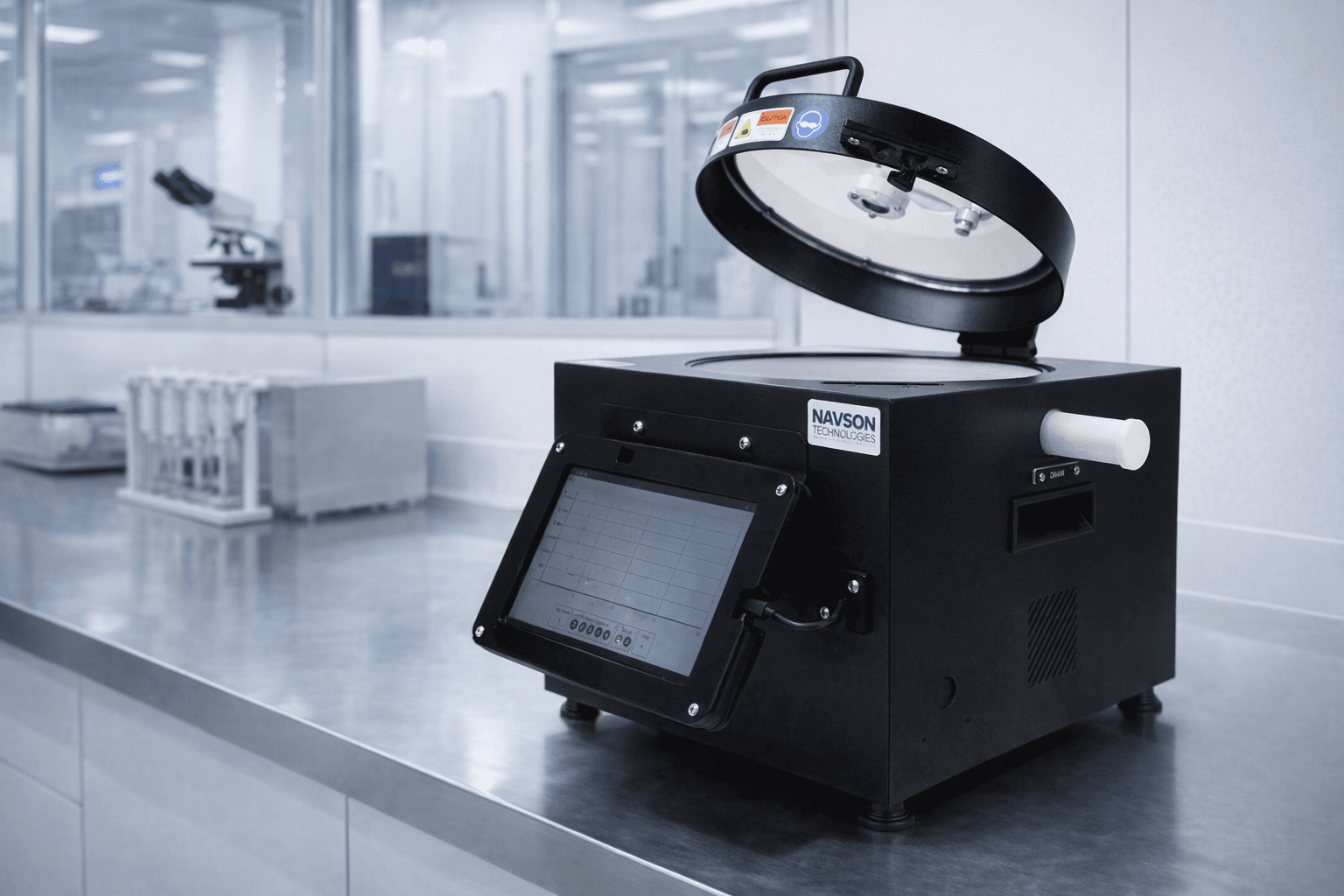
The performance of the NT12000 is not just a specification on a data sheet; it is a tool trusted by researchers for high-impact materials development. In a recent study published in the Journal of Electronic Materials (Springer), researchers utilized the Navson NT12000 to spin-coat PMMA-LZO composite dielectric films.
The study, “PMMA-LZO Composite Dielectric Film with an Improved Energy Storage Density,” specifically notes the use of the vacuum-free spin coater (Navson-NT12000) for achieving the uniformity required for advanced dielectric applications. This confirms that our precision architecture meets the rigorous demands of modern nanotechnology and materials research.
Kishor Kumar, M.J., Kalathi, J.T. PMMA-LZO Composite Dielectric Film with an Improved Energy Storage Density. J. Electron. Mater. 48, 7654–7661 (2019). https://doi.org/10.1007/s11664-019-07580-1
Where NT12000 Sits in This Framework
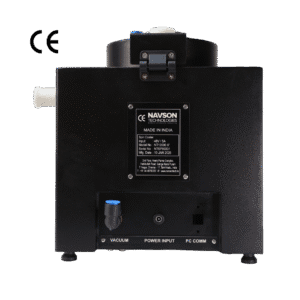
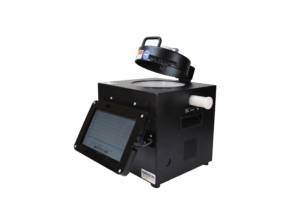
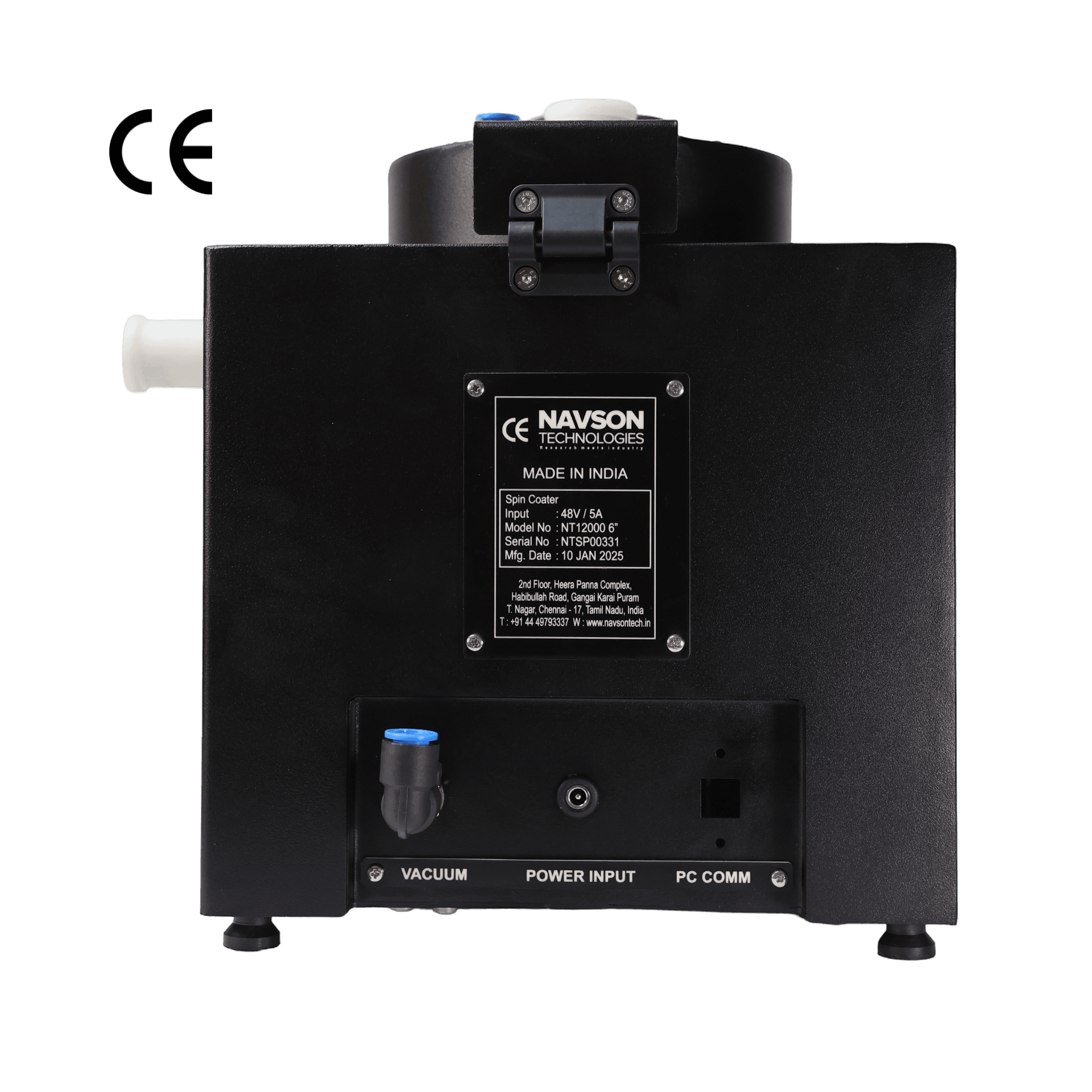
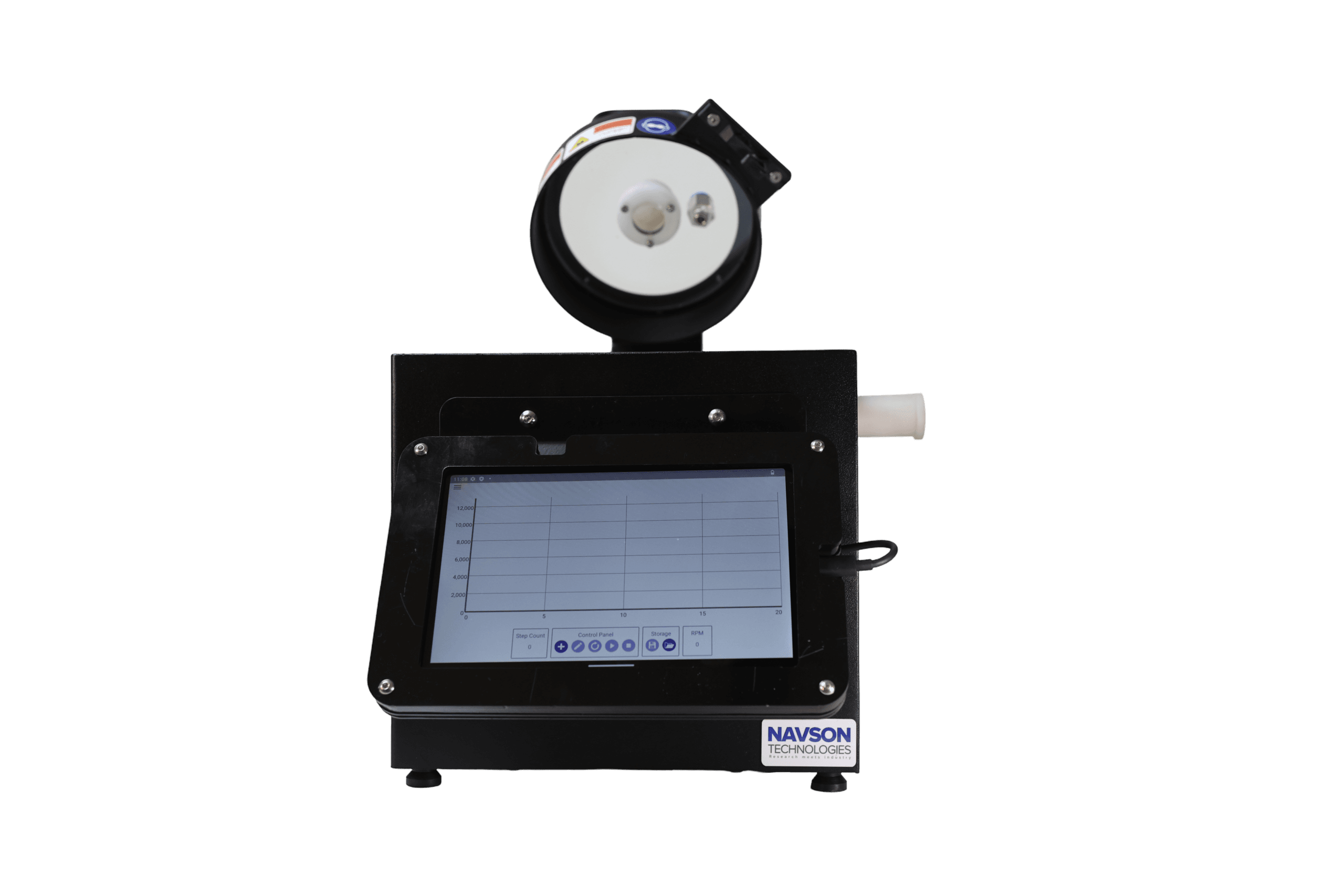
Referenced in peer-reviewed research publications across platforms such as ACS, Science Direct, and Springer publications, the NT12000 is designed to operate within the control range required for reproducible PMMA coatings.
- Its ±1% RPM stability maintains consistent shear conditions during solvent-driven thinning. This directly stabilizes thickness outcomes in the sub-micron range.
- The multi-step programmable architecture allows the coating sequence—spread, ramp, and thinning—to be defined explicitly. Each step can be repeated without variation, eliminating one of the primary sources of experimental drift.
- Controlled ramp profiles ensure that acceleration is not an uncontrolled transition. This stabilizes solvent evaporation dynamics during the most sensitive phase of the process.
- The hybrid chuck system extends stability to substrates that are not perfectly rigid. Vacuum and vacuum-less modes allow consistent handling across silicon wafers, glass, and flexible polymer layers.
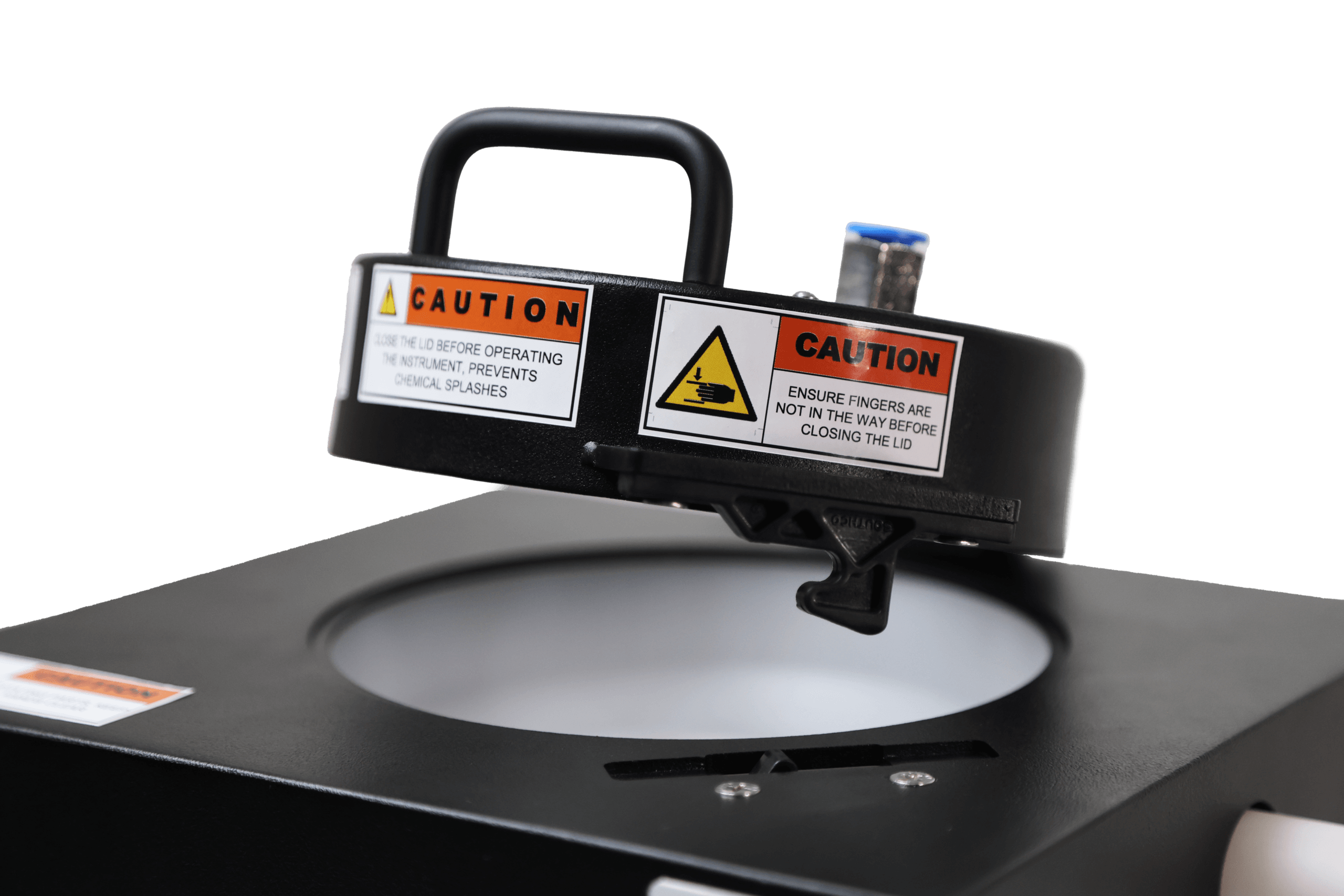
- The chemical-resistant chamber maintains internal consistency over time, avoiding degradation that would otherwise introduce variability after repeated solvent exposure.
In terms of core process parameters—stability, programmability, and repeatability—the system operates in the same category as platforms from other suppliers. The difference is primarily in cost structure, lead time, and local support.
“During our internal validation tests, we subjected the NT12000 to prolonged solvent exposure while running a continuous 3000 RPM cycle. We logged the RPM data over a 60-minute duration and consistently maintained ±1% deviation across the board.” — V. V. Rajasekhar, Founder, Navson Technologies
Addressing Common Evaluation Questions
A typical comparison point is accuracy relative to imported systems.
- On measurable parameters such as RPM stability, the NT12000 operates at ±1%, which is within the range expected for research-grade coating. Film repeatability then depends on how well the process is defined, not on the brand label of the equipment.
- Long-term reliability is determined by motor stability, control consistency, and material resistance inside the chamber. These are addressed through the system’s control architecture and solvent-resistant design.
- For cleanroom environments, the benchtop enclosed configuration supports standard integration practices. The system itself does not introduce additional contamination pathways beyond what is typical for this class of equipment.
- Support considerations tend to be practical rather than technical. Systems that require overseas servicing introduce downtime measured in weeks. Procurement cycles in Indian institutions benefit from local availability, which reduces that constraint significantly.
The Cost That Doesn’t Appear in the Quote
A lower spin coater price often shifts cost into the process itself.
When RPM fluctuates or ramp behavior varies, the system does not fail outright. Instead, it produces results that require repetition. Each additional run consumes material and time. In polymer work, especially at sub-micron thickness, those iterations accumulate quickly.
Over a typical research cycle, the cost of repeated experiments can exceed the difference between entry-level and precision systems. The impact is less visible than the purchase price, but more consequential.
A More Reliable Way to Evaluate
A useful starting point is not the budget, but the process requirements:
- target thickness range (e.g., 200–500 nm)
- solution viscosity and solvent system
- substrate type (rigid vs flexible)
- required repeatability across batches
If the process demands consistent sub-micron films and reproducibility across runs, the viable options narrow to systems that maintain control over RPM, ramp, and substrate stability within tight tolerances. At that point, the spin coater cost in India becomes a secondary filter rather than the primary decision variable.
“It is worth noting that while the NT12000 provides high-precision control, the final result is also heavily dependent on the cleanroom grade and the purity of the precursor solution. We assume a standard cleanroom environment (Class 1000 or better) for best results.”
Request Technical Quote for Your Application
For applications such as PMMA coatings, perovskite solar cells, or other thin-film processes, system configuration should be matched to the exact process conditions rather than selected from a generic specification.
Provide:
- polymer type (e.g., PMMA)
- target thickness (nm)
- substrate type
- solvent system
The configuration can then be aligned to achieve consistent, repeatable thin-film results without iteration cycles.