
Spin Coater Germany: Why Research Labs Prioritize Process Reliability
- Why Spin Coating Still Matters in Germany’s Semiconductor and MEMS Ecosystem
- What Is a Spin Coater?
- Most Thin-Film Problems Are Not Material Problems
- Why German Research Labs Care So Much About Repeatability
- Why RPM Alone Is a Misleading Metric
- Common Spin Coating Problems in Research Labs
- Spin Coating Applications Across Germany’s Research Ecosystem
- Why Modular Spin Coating Systems Are Becoming More Valuable
- What High-Performing Research Labs Do Differently
- Choosing a Spin Coater Germany for Long-Term Research Reliability
High-Precision Spin Coaters for German Semiconductor & MEMS Research
| Research Priority in German Labs | Why It Matters Operationally |
|---|---|
| Repeatable thin-film deposition | Improves reproducibility and reduces failed wafer runs |
| Stable coating behavior across users | Critical in shared university cleanrooms |
| Chemical-resistant chamber design | Important for SU-8, solvents, and polymer workflows |
| Modular process flexibility | Supports evolving MEMS and nanotechnology research |
| Reliable long-term operation | Minimizes disruption during active research cycles |
In many German cleanrooms, failed fabrication runs do not begin with catastrophic equipment failure. They begin with small inconsistencies nobody notices immediately. A slightly uneven photoresist layer, or a wafer that shifts microscopically during acceleration. An SU-8 coating that behaves differently between operators, or a process recipe that worked perfectly six months ago but suddenly produces unreliable results after multiple researchers start sharing the same system.
And by the time the issue becomes visible, valuable research time has already been lost. In advanced fabrication environments, thin-film instability compounds quietly.
That is why spin coating remains one of the most underestimated process steps in semiconductor research, MEMS fabrication, photolithography, and nanotechnology labs across Germany. Because in practice, reliable thin-film deposition is not just about spinning wafers at high RPM. It is about reproducibility under real laboratory conditions.
Why Spin Coating Still Matters in Germany’s Semiconductor and MEMS Ecosystem
Germany continues expanding its semiconductor and advanced materials ecosystem through investments linked to the European Chips Act1, applied microfabrication initiatives, and semiconductor research clusters around regions such as Dresden, Aachen, Karlsruhe, and Munich.
Research institutes and university cleanrooms—particularly those within the Silicon Saxony cluster (Dresden) and research hubs in Aachen, Karlsruhe, Munich, and Hamburg—are increasingly moving toward pilot-scale fabrication for:
- MEMS & BioMEMS (Sacrificial layers and structural polymers)
- Photonics & Microfluidics (High-aspect-ratio SU-8 structures)
- Thin-Film Electronics (Conductive polymers and nanoparticle suspensions)
- Semiconductor Prototyping (Advanced Fotolack—photoresist—deposition)
In these high-performance environments, inconsistent coating quality affects far more than surface appearance. It directly influences device yield, lithography precision, research reproducibility, and the long-term reliability of shared fabrication infrastructure.
- Lithography precision
- Device yield
- Process reproducibility
- Research timelines
- Publication reliability
- Material characterization
And unlike obvious equipment failures, coating instability often appears gradually; that makes it difficult to diagnose. This is why spin coater Germany solutions are increasingly evaluated on repeatability rather than maximum RPM.
What Is a Spin Coater?
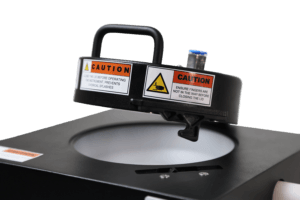
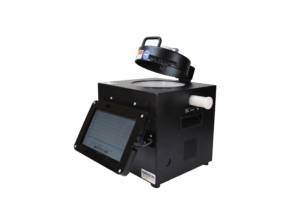
A spin coater is a laboratory system used to deposit highly uniform thin films onto substrates such as silicon wafers, glass, ceramics, polymers, or metal-coated surfaces. During spin coating, a liquid material is dispensed onto the substrate while the system rotates at controlled speeds — often between 500 and 12,000 RPM. Centrifugal force spreads the material across the surface while excess liquid is expelled outward.
The process is widely used for:
- Photoresist spin coating
- SU-8 processing
- MEMS fabrication
- Sol-gel deposition
- Nanomaterials research
- Polymer thin films
- Microfluidics fabrication
- Semiconductor prototyping
The final coating thickness depends on several variables, including:
- Spin speed
- Acceleration profile
- Material viscosity
- Solvent evaporation rate
- Ambient humidity
- Dispensing consistency
- Surface energy of the substrate
Even small variations in these parameters can affect coating uniformity significantly.
Most Thin-Film Problems Are Not Material Problems
This is one of the least discussed realities in research-scale fabrication. Many labs initially assume coating inconsistencies originate from chemistry:
- the resist formulation
- solvent composition
- material aging
- substrate compatibility
But in practice, many thin-film failures originate from workflow instability instead. Experienced process engineers repeatedly encounter issues such as:
- Substrate movement during acceleration
- Operator-dependent dispensing
- Airflow disruption
- Inconsistent vacuum holding
- Chamber contamination
- Poor repeatability between users
- Solvent residue buildup
- Vibration transfer during spinning
These problems rarely appear on specification sheets, but they directly influence:
- Film thickness consistency
- Edge bead formation
- Pattern transfer quality
- Surface morphology
- Wafer yield
- Device repeatability
In many university environments, the challenge becomes even harder because multiple researchers use the same equipment differently. One process recipe may work perfectly for a single experienced operator — then become unstable once the workflow spreads across an entire lab. That problem is extremely common in shared cleanroom environments.
Why German Research Labs Care So Much About Repeatability
Spin coater Germany procurement increasingly focuses on reproducible thin-film deposition across multi-user cleanrooms. Research reproducibility carries unusually high importance in German semiconductor and applied materials environments. A process that works once is interesting, and a process that remains stable across different operators, multiple wafer batches, changing environmental conditions, and long research cycles becomes scientifically valuable.
This is particularly important in:
- MEMS development
- Photolithography
- Sensor fabrication
- BioMEMS
- Microfluidics
- Wafer bonding workflows
- Thin-film electronics
As publication pressure increases and fabrication complexity grows, many labs now prioritize repeatability over raw specifications. That changes how advanced research groups evaluate spin coating systems.
Why RPM Alone Is a Misleading Metric
Many laboratories initially evaluate spin coaters primarily through RPM specifications and upfront pricing. But in long-term research environments, workflow stability, maintenance simplicity, repeatability between users, and process adaptability usually have a far greater operational impact. This is particularly true in shared university cleanrooms, where multiple researchers, changing materials, and evolving fabrication requirements place continuous stress on process reliability.
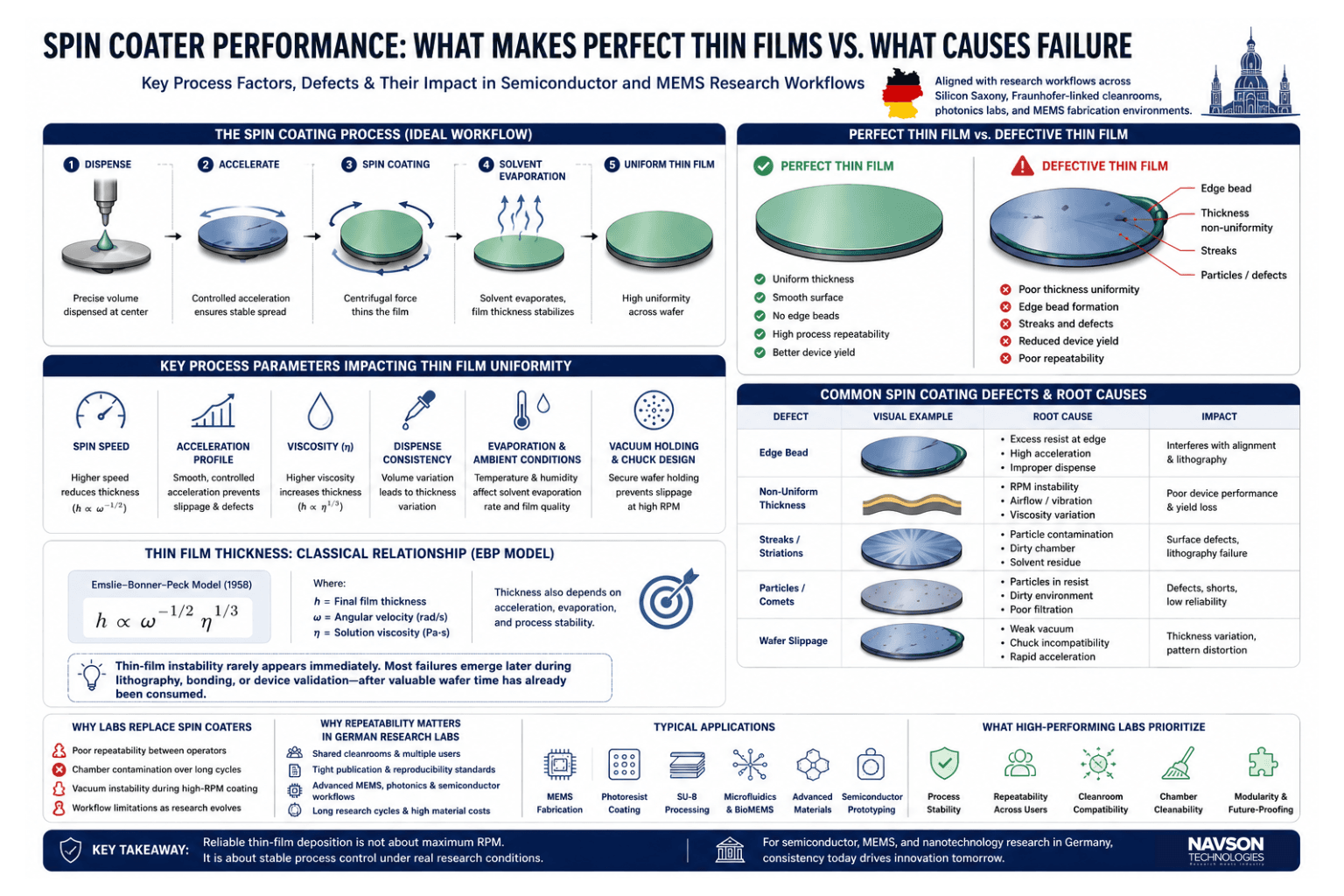
One reason coating behavior becomes difficult to predict is that final film thickness depends on multiple interacting variables — not rotational speed alone. Thin-film thickness behavior in spin coating is commonly approximated using scaling relationships derived from the foundational Emslie–Bonner–Peck2 hydrodynamic model.
Where: ω = angular velocity, η = solution viscosity. Reference: A. G. Emslie, F. T. Bonner, and L. G. Peck, “Flow of a Viscous Liquid on a Rotating Disk,” Journal of Applied Physics, Vol. 29, No. 5, 1958, pp. 858–862.
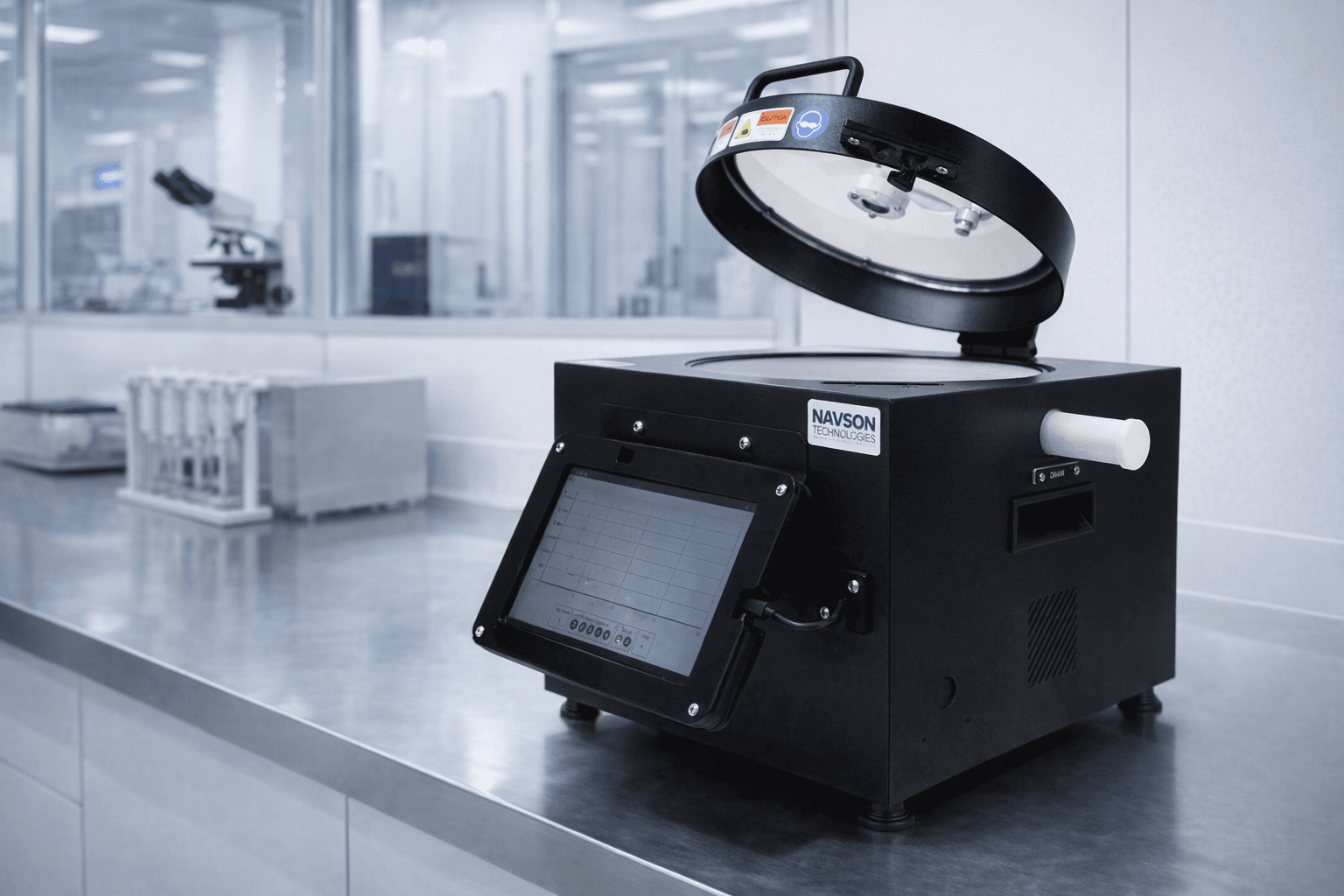
In practice, a system with poor acceleration slope control or unstable substrate holding may still produce large thickness variations despite high maximum RPM capability.
A high-RPM system with inconsistent chuck stability, poor chemical resistance, weak repeatability, difficult chamber cleaning, unstable substrate holding can quietly create major process variability over time.
This is especially visible during:
- Thick photoresist coating
- SU-8 processing
- Large substrate coating
- Solvent-heavy workflows
- Long-duration research use
The operational costs become substantial:
- Failed wafer runs
- Delayed publications
- Increased solvent waste
- Repeated process tuning
- Research downtime
- Reduced confidence in experimental data
Most labs do not formally calculate these losses, but they experience them continuously.
In advanced semiconductor and MEMS workflows, thin-film defects rarely originate from a single variable. Most failures emerge from interactions between acceleration stability, solvent behavior, chamber conditions, and operator consistency.
| Specification | Basic Spin Coater | Advanced Research System |
|---|---|---|
| RPM stability | Moderate | High precision |
| Recipe programming | Limited | Multi-step programmable |
| Chamber resistance | Standard plastics | Chemical-resistant materials |
| Workflow repeatability | Operator-dependent | Process-controlled |
| Scalability | Limited | Supports evolving workflows |
Common Spin Coating Problems in Research Labs
Nonuniform Thin Films
Uneven coating thickness is often caused by
- unstable acceleration
- uneven substrates
- airflow disruption
- inconsistent dispensing
- vibration transfer
Even slight nonuniformity can affect lithographic accuracy.
Edge Bead Formation
Edge beads occur when excess resist accumulates near the wafer perimeter. This becomes particularly problematic during:
- SU-8 processing
- Thick resist coating
- Wafer bonding
- Fine-feature lithography
Poor edge control can interfere with alignment and downstream processing.
Wafer Slippage During High RPM
Substrate movement during spinning remains one of the most damaging process failures in thin-film deposition. Potential causes include:
- weak vacuum holding
- incompatible chuck design
- improper substrate seating
- rapid acceleration profiles
Once slippage occurs, process repeatability often collapses.
Contamination and Solvent Residue
Many labs underestimate how strongly chamber maintenance affects thin-film quality. Residual solvent buildup can gradually introduce:
- particle contamination
- coating defects
- inconsistent wetting behavior
- cleaning difficulty
This becomes more severe in shared research environments.
Spin Coating Applications Across Germany’s Research Ecosystem
Spin coating remains foundational across several research and semiconductor applications in Germany.
MEMS Fabrication
MEMS workflows commonly use spin coating for:
- sacrificial layers
- structural polymers
- lithographic masking
- surface preparation
Process consistency becomes critical at micron-scale geometries.
Photoresist Spin Coating
Photolithography workflows depend heavily on:
- thickness uniformity
- defect reduction
- repeatable resist spreading
Even small coating inconsistencies can affect pattern transfer quality.
SU-8 and Thick Resist Processing
SU-8 remains widely used in:
- microfluidics
- BioMEMS
- high-aspect-ratio structures
- optical applications
These workflows place much greater demands on vibration stability, solvent compatibility, repeatability, chamber cleanability.
Nanotechnology and Functional Materials
Research groups working with:
- conductive polymers
- nanoparticle suspensions
- hybrid thin films
- advanced coatings
often require highly adaptable process configurations. Rigid systems quickly become limiting in experimental environments.
Why Research Procurement Often Misses Workflow Reality
Many laboratories in Germany evaluate equipment primarily through spec sheets and initial pricing. However, over long research cycles, the “hidden costs” of a low-quality system become substantial:
- Failed wafer runs in shared facilities.
- Repeated process tuning when materials change.
- Research downtime due to poor chamber cleanability.
This is especially true in shared university cleanrooms, where equipment reliability affects not only individual experiments but the productivity of entire research groups. Small inconsistencies that appear manageable during early testing often compound significantly under continuous multi-user operation.
The strongest thin-film workflows are built around systems that reduce uncertainty quietly and consistently. This includes a focus on service continuity and local technical support—factors that German PIs and procurement officers increasingly prioritize to ensure that a system purchased today remains a reliable asset five years from now.
Why Modular Spin Coating Systems Are Becoming More Valuable
One reality many research labs discover too late is their workflows evolve faster than their equipment architecture. A spin coater initially purchased for standard photoresist work may later become central to:
- polymer research
- microfluidics
- MEMS development
- nanomaterials
- wafer prototyping
This is why modularity increasingly matters in research-scale fabrication.
Modern labs often benefit from:
- interchangeable substrate chucks
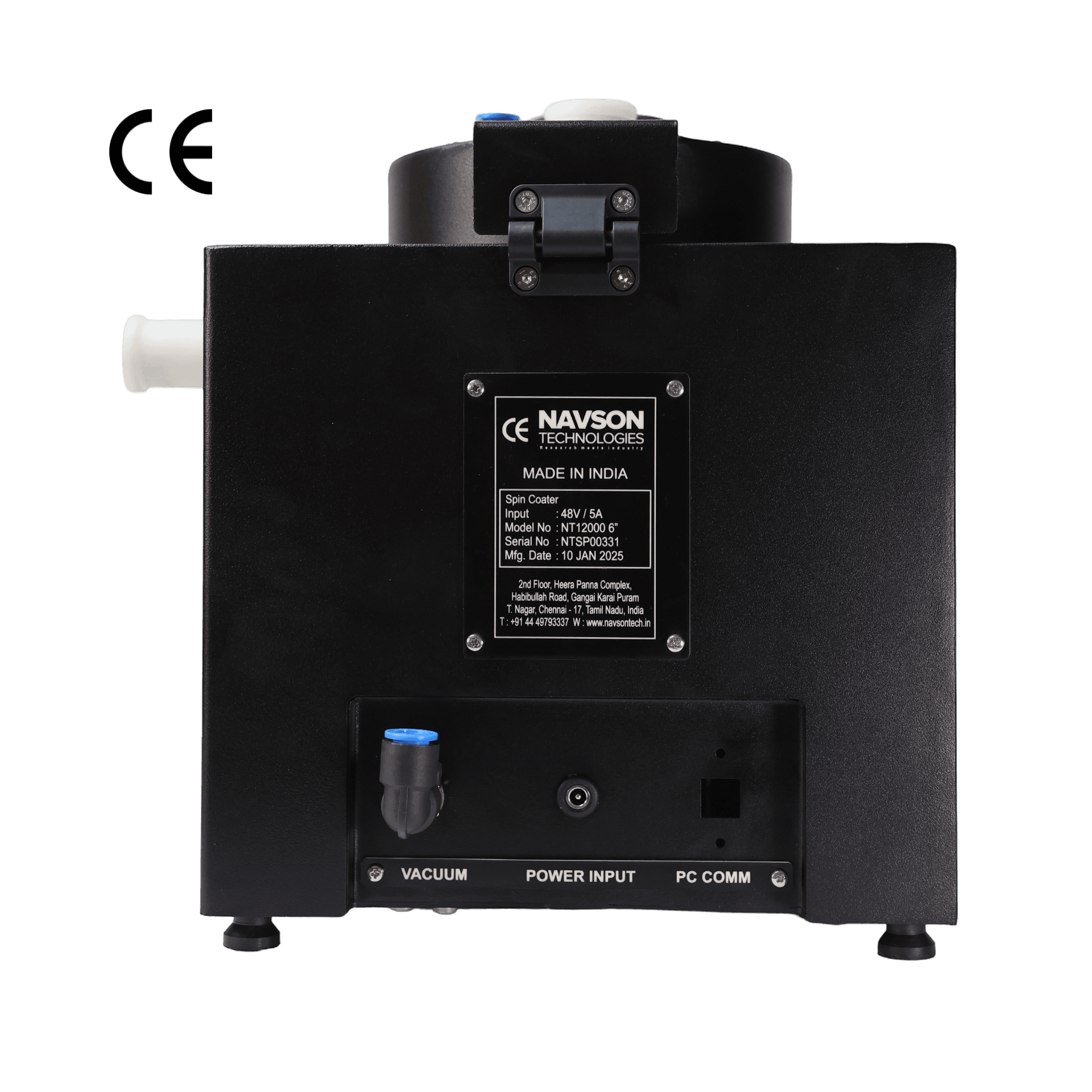
- vacuum and vacuum-less operation
- syringe pump integration
- UV curing support
- IR heating integration
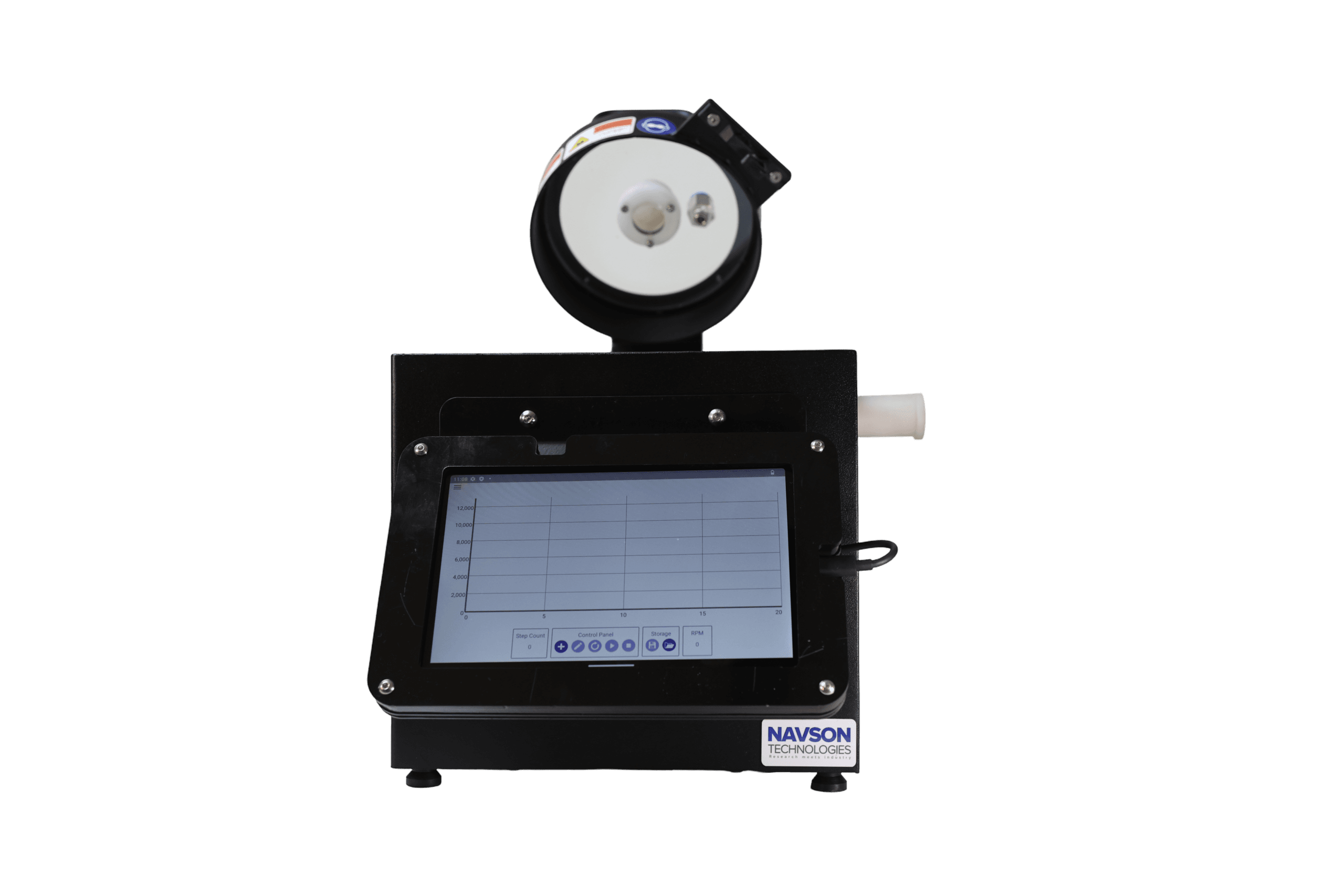
- recipe-controlled software workflows
Not because these features merely sound advanced, but because they reduce workflow friction as research complexity grows.
What High-Performing Research Labs Do Differently
The best fabrication environments rarely optimize around specifications alone. They optimize around operational consistency. That usually means prioritizing:
- repeatability between users
- stable coating behavior
- process simplicity
- maintainability
- chemical resistance
- adaptable workflows
- reduced operator variability
In practice, the most reliable research workflows are often built on systems that quietly reduce uncertainty over hundreds of runs — not systems that merely look impressive during demonstrations. That distinction becomes increasingly important as cleanroom workloads grow.
Frequently Asked Questions About Spin Coaters in Germany
Cleanroom Compatibility and Reinraum Workflows
Modern Reinraum (cleanroom) environments increasingly require spin coating systems capable of maintaining stable thin-film behavior across multiple users, solvents, and substrate types. In German semiconductor and MEMS research facilities, cleanroom compatibility now extends beyond particle control to include process repeatability, solvent management, and long-term operational stability.
Choosing a Spin Coater Germany for Long-Term Research Reliability
Selecting the right spin coater Germany solution involves evaluating process stability, modularity, and long-term service support. Research labs rarely struggle because they lack equipment. More often, they struggle because process stability gradually erodes under real operating conditions — multiple users, evolving materials, changing workflows, and increasing reproducibility pressure.
The strongest thin-film workflows are usually built around systems that reduce uncertainty quietly and consistently over long research cycles.
For semiconductor, MEMS, photolithography, and advanced materials labs across Germany, the future of spin coating is not simply higher rotational speed. It is stable, repeatable thin-film deposition under real laboratory conditions.